

Philhellenism Then and Now

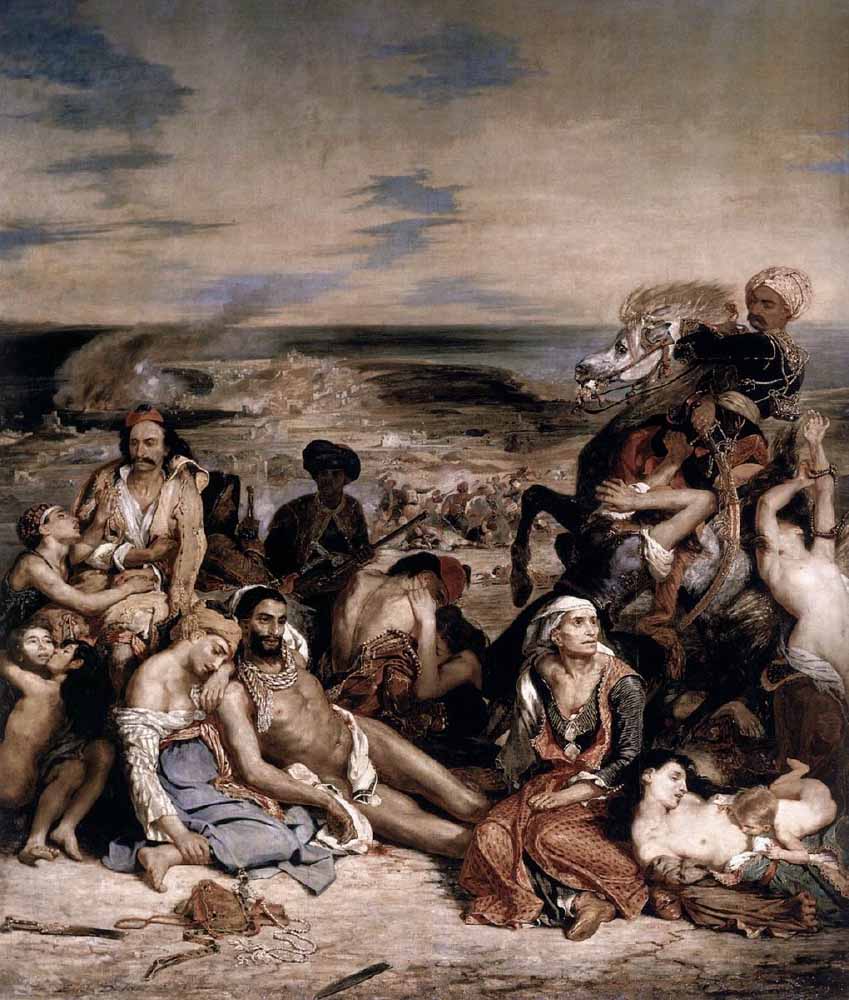
Philhellenism was a major political, social, and artistic phenomenon that spread across Europe in the wake of the Greek Revolution of 1821. In essence, however, Philhellenism—understood as admiration and love for the Greek spirit—has far older roots. It reaches back at least to ancient Rome, with Cicero as one of its emblematic representatives. The Renaissance and the Enlightenment carried powerful philhellenic currents as well, as did the leaders, military figures, and intellectuals of the American Revolution.
What makes the phenomenon historically known as the “Philhellenic Movement” distinctive is its extraordinary breadth: it permeated every social class, encompassed every political tendency (from the King of Bavaria to the champions of democracy), and found expression across a remarkable range of arts—visual and performing arts, music, literature, and even popular and functional objects of applied art. In many cases, especially in France, philhellenic art endured for decades and intersected with Orientalism, particularly in painting. The roster of Philhellenes in letters and the arts is extensive and includes leading figures of the movement, such as François-René de Chateaubriand, president of the Paris Philhellenic Committee; Lord Byron in England; and Goethe in Germany, alongside the ardent Philhellene Wilhelm Müller.
French Philhellenism
In the visual arts, the towering figure was Eugène Delacroix, who exhibited The Massacre at Chios in 1824 and, at the “For the Greeks” exhibition in 1826 in Paris (Galerie Lebrun), presented his celebrated work Greece on the Ruins of Missolonghi. The Exodus of Missolonghi—two hundred years ago—played a decisive role in reigniting Philhellenism, as it evoked associations with the great moments of antiquity, above all Thermopylae. The French press hailed the Greeks as “New Leonidases,” and a new wave of Philhellenism surged across France. In France, Philhellenes organized themselves into various groups, taking the form of societies (sociétés) or committees (comités), and raised funds through collections, auctions, or simple subscriptions. One notable means of fundraising was the famed musical evenings, where philhellenic songs were performed and a collection followed in support of the Greek struggle. These events were led by hostesses—an often overlooked fact is that it was these French women who sewed the majority of the silk Greek flags used in the War of Independence. The song titles, published with covers by celebrated engravers of the era, reveal the sources of emotion and creative inspiration for composers: “The Song of the Greeks,” “Leonidas at Thermopylae,” “The Dream of a Greek Hero,” “France to the Greeks” (La France aux Grecs), Le nouveau serment des Grecs à Thermopyles, Le réveil des Grecs, “The Widow of Markos Botsaris at the Altar of the Virgin,” “Byron in the Camp of the Greeks,” “The Last Day of Missolonghi,” “The Klepht’s Farewell,” Le Giaour, “Departure for the Morea,” “The Spartan,” and many similar works.
Special mention should be made of longer-form
compositions such as Hector Berlioz’s heroic scene from the Greek Revolution (1825); Louis Ferdinand Hérold’s melodrama The Last Day of Missolonghi; and, above all, Gioachino Rossini’s The Siege of Corinth, a three-act lyric tragedy premiered at the Académie Royale de Musique on 9 October 1826, with the explicit aim of raising funds to support the fighting Greeks. This striking work—more a reworking than an adaptation of an earlier composition by the composer—closes with the heroic decision of Corinth’s civic and religious leaders to die rather than surrender to Mehmed the Conqueror.
Yet what drew people most powerfully was the determination of the Greeks themselves to live the motto “Freedom or Death.” The massacre of Chios, the women of Souli, and the incomparable Exodus of the Free Besieged of Messolonghi moved and stirred Western public opinion as far away as America.

And they did not stop coming. They were present in the Cretan Revolt; present in the war of 1897; present in the Balkan Wars. There is no other people on earth to whom so many—and such—volunteers have rallied. We owe it, as Kolokotronis said, to the “marbles,” meaning the ancient inheritance, but also to our recurring willingness to prove ourselves worthy heirs rather than boastful, empty talkers.
We are the only people who, without lifting a finger, without paying millions to lobbyists, continue to gain new friends in every country. Philhellenes are everywhere; they are moved by the same emotions, both intellectual and heartfelt. They expect us to honor our name with new works, and they are always stirred by our achievements. They rejoice and speak of descendants of Anacreon and Pindar when Seferis and Elytis win the Nobel Prize; they admire Melina as a modern Greek goddess; they compare Vangelis to Orpheus; and they never miss an opportunity to stand with us. Just as no one was moved by the Serbian Revolution of 1804 in the way they were by that of the Greeks, so too did they pay little heed to Latvia’s bankruptcy in 2008–09, while so many rose to support Greece—from Riccardo Muti to Jean-Luc Godard, and from Jack Lang to Jürgen Habermas. Those of us who have lived abroad know that, in our face, they see a civilization—their own civilization. Two hundred years on, it remains useful to remind them, through words and acts of gratitude and recognition, of what their forebears did for us.
And it is essential that we assume—without complexes of superiority or inferiority, with pride and without arrogance—the weight of our enduring spiritual inheritance. Not through stagnant ancestor-worship, but through a renewed, continuous application of the same values and principles that first inspired the world’s admiration for the Greek spirit. Monuments and marbles matter; more important, however, is the spirit that gave birth to them.
What's Your Reaction?