
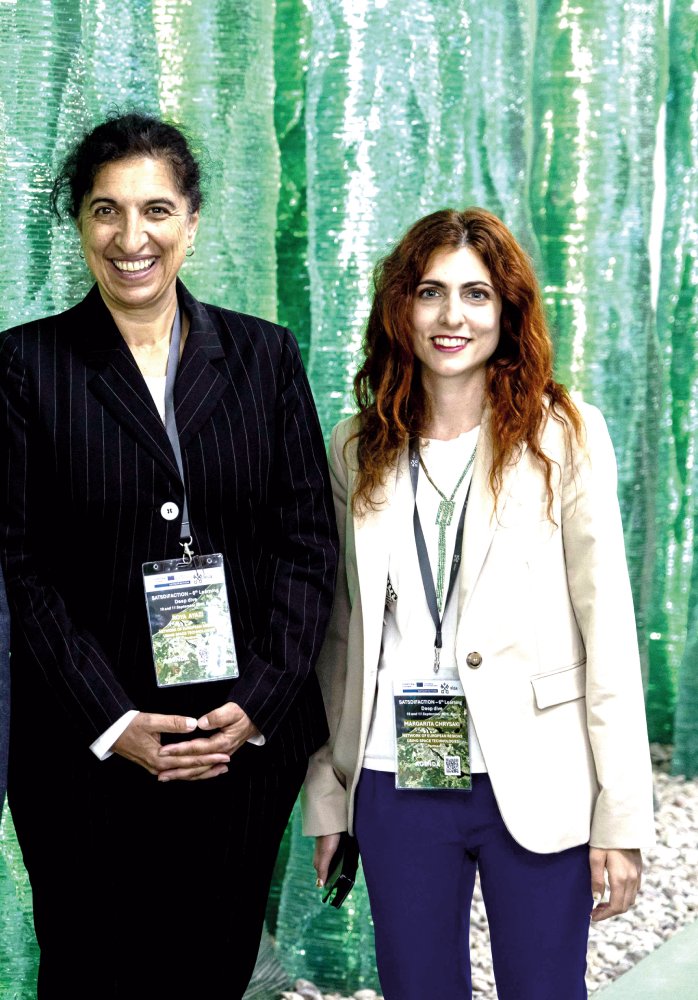
Margarita Chrysaki – NEREUS Communication, Policy and Project Officer Space Sustainability expert


Space is no longer a distant frontier—it is a strategic domain that shapes everyday life on Earth, from climate resilience and civil protection to security and regional development. Margarita Chrysaki, one of the few Greek women building a career in the European space sector, knows better. Brussels-based and deeply engaged in space policy and sustainability, Mrs Chrysaki works at the intersection of science, governance, and society. As a leading voice on responsible space use, a mentor in the United Nations Space4Women programme, and a leading expert at NEREUS’s communication and project activities, she advocates for a space ecosystem that is inclusive, sustainable, and directly beneficial to citizens. In this interview, she speaks about her journey, the growing challenge of space debris, the role of regions in the space sector, and why space matters now more than ever—for Europe, for Greece, and for future generations.
NEREUS – Network of European Regions Using Space Technologies.
As one of a few Greek women with a career in the space sector, how would you describe your journey to where you are today?
Quite challenging but also deeply rewarding. I have been Brussels-based for over a decade, and my professional journey through the European sector, combined with my academic background in space policy, made me to appreciate not only its scientific allure but its transformative power: how space can help us tackle challenges on Earth and enhance the quality of life for societies across Europe and beyond. Along the way, I am fortunate to have strong advisers and to learn from key figures in the field, which shape my path and help me grow professionally.

In your point of view, what is the most pressing challenge facing the space sector today?
One of the most urgent challenges facing us today is space sustainability. The issue of space debris is perhaps the most striking example: thousands of satellites already orbit the Earth, and with commercial activity accelerating, we face a real risk of congestion, collisions, and long-lasting debris that could one day make satellite launches extremely difficult, or even impossible. Space debris may become humanity’s biggest problem, with 100,000 satellites expected by 2030! Another major but questionable shift is the democratisation of space. What was once the exclusive domain of government agencies is now a vibrant ecosystem powered by private companies, startups, and SMEs, fuelling innovation at an unprecedented pace. But this expansion also brings new concerns. As the market remains dominated by a few major actors, smaller players/countries may struggle to access opportunities, raising important questions about fairness, responsible growth, and the sustainable use of orbital resources.
You are also a space sustainability expert. What does space sustainability mean in practical terms?
Put simply, space sustainability means ensuring we can use space responsibly: environmentally, ethically, and safely for current and future generations. In my research, I make the case for a Voluntary Code of Conduct for the space industry, an innovative, forward-looking tool inspired by the humanitarian principle of “do no harm.” The article also highlights why such a code is urgently needed today and offers clear advantages for individual companies.
“Space debris may become humanity’s biggest problem, with 100,000 satellites expected by 2030!”
Your work is deeply rooted in the idea of using space to benefit society. How does this translate into concrete actions, and how does your organisation implement this vision at regional level?
Did you know that many of society’s biggest challenges can be solved with just a little help from space? At NEREUS (the Network of European Regions Using Space Technologies), our mission is twofold: to represent the interests of regions to the European level and explore the benefits of space solutions for the regional and local level. Regions are the protagonists because they are closest link to citizens’ needs and responsible for all public domains, such as environment, agriculture, mobility, emergency response, and maritime sector. Our daily work is to raise awareness, foster political dialogue, and advocate for space as a strategic tool for regional development. By connecting local ecosystems (public sector, universities, SMEs, research centres) with EU institutions, European Space Agency, and other space stakeholders, we bring the EU experience/trends at local and regional levels, and ensure regions have a strong and influential voice in European space agenda.
Why is space important for Greece, and where do you see the country’s greatest opportunities?
Greece faces similar challenges to many EU regions, including wildfires, and the protection of cultural heritage. These are areas where space can deliver immediate value. Systematic use of Copernicus services at regional and local levels would strengthen prevention, improve preparedness, and support better decision-making across civil protection and environmental management. Space also holds strategic importance for Greece in defence and security. Given Greece’s challenging geopolitical context, investment in Earth observation, secure communications, and situational awareness would enhance national resilience. At the same time, Greece has a strong entrepreneurial culture, vibrant SMEs, and growing innovation ecosystem that can thrive within the expanding space economy.
In 2023, you were appointed as a mentor in the United Nations Space4Women Mentorship Programme. Is the space sector a welcoming domain for women?
Beyond my professional responsibilities, I am deeply committed to advancing diversity and inclusion in the space sector. In 2023, I was honoured to serve as a mentor in the United Nations Space4Women programme, an initiative of UNOOSA that promotes gender equality and supports women pursuing careers in space. I am also an active member of Women in Aerospace, where we work to highlight female leadership and create opportunities for the next generation. The space sector has historically been male dominated, but this is changing. Today, space is a truly cross-sectoral domain that welcomes talent from every professional background.
What are your next steps or ambitions within the space sector?
We live on this planet for only a short time, and each of us has a responsibility to leave a positive mark. My vision is to help shape a sustainable and responsible space ecosystem that benefits both Earth and future generations.
Thank you very much!