
Xenia Papastavrou – Zero Tolerance for Child Abuse


Xenia Papastavrou belongs to that generation of people who combine sensitivity with effectiveness. In her, ELIZA finds a leader who looks beyond day-to-day management and envisions a society that is fairer and safer for every child. As Director of the ELIZA, she has dedicated her life to the prevention and response to child abuse, striving to build a society that listens, sees, and protects. Her journey began with Boroume (“We Can”)—a pioneering initiative against food waste—and evolved into her current leadership role at ELIZA. Her work blends social innovation with a deep, practical love for humanity. In the following interview, she speaks about the power of collaboration, the importance of prevention, and the urgent need to break the silence—because every child deserves to live with safety, dignity, and light.

Ms. Papastavrou, where did your personal journey begin, and what led you to dedicate yourself to protecting children through ELIZA?
I learned from a young age that we must help wherever there is need. For me, it’s self-evident that we cannot remain passive when people around us are suffering. The greatest social problems are preventable—and that became my personal path. In May 2011, seeing the issue of food waste, I felt compelled to act. From the problem, I arrived at a simple, missing solution: creating a mechanism that connects supply and demand—what I called Boroume. It seemed absurd that while queues at soup kitchens grew, tons of food were being thrown away. Child abuse and neglect are also problems we can prevent. ELIZA is the only organization in Greece focused exclusively on the prevention and management of child abuse. In 2024, I decided to devote myself fully to this mission. I believe we have a responsibility to help every child and every family—to prevent abuse and neglect before they occur.
ELIZA strives so that “no child goes unnoticed, no child remains silent.” How does this vision translate into action through your initiatives?
In practice, we take action to ensure that every child is surrounded by a supportive environment—families or caregivers, but also professionals such as teachers, doctors, and coaches who do not look away. We train them to recognize signs or suspicions of abuse or neglect, to know how to respond, and most importantly, not to remain indifferent. Our work rests on two main pillars: prevention and early detection, intervention, and management of abuse cases. We strive for our programs to reach every part of Greece—using technology to extend our impact even to remote villages that may lack access to healthcare and social services.

Abuse often comes with silence, fear, and ignorance. What are the main gaps you still see in the system, and how do you build bridges with the State and society to change this?
We confront silence, fear, and ignorance with initiatives and determination. Where there are gaps, we build bridges. We form strategic partnerships that can generate greater impact. For example, together with our strategic partner Piraeus Bank, we are implementing an innovative and much-needed training program in kindergartens across Greece—with the institutional support of the State. Only through strong alliances and collaborative efforts like these can we address major social issues effectively.
You invests heavily in training frontline professionals, in hospital-based initiatives, and in the “Children’s Houses.” What is the value of these interventions, and what impact have they had so far?
This is precisely where we focus our efforts—on frontline professionals and spaces where children are present, such as hospitals and Children’s Houses—because our goal is to strengthen the national child protection system. To achieve this, we must act as a supportive partner to public initiatives and ensure that professionals working with children know how to help them.
In practice, this means two things. First, we support the significant progress made by the State, such as the Children’s Houses—special facilities where child victims of abuse are examined in an appropriate, child-friendly environment. Promoting child-friendly justice is a priority for us, and we stand alongside the State’s efforts. Currently, such facilities operate in Athens, Piraeus, and more recently Thessaloniki, where we contributed with the support of the Antonios and Ioannis Angelicoussis Foundation.
Second, we remain present on the front line of the National Health System. In five public hospitals—Athens, Thessaloniki, Patras, and Alexandroupolis—ELIZA has established Child Safety Care Units within university pediatric clinics. Their purpose is the early detection, comprehensive assessment, and medical care of children suspected of being abused or neglected. To date, more than 30,000 professionals have been trained through our programs. We also support them through the ELIZA Helpline 10454, which offers free assistance and guidance for cases of child abuse—helping children, parents, and anyone in need.
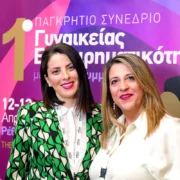
November marks two important occasions: the World Day for the Prevention of Child Abuse and the World Children’s Day. ELIZA is organizing a discussion with journalists. What is the message you wish to convey through this event?
Awareness and mobilization are essential. The message is that every one of us—and especially journalists—can help ensure that everyone in Greece knows what to do to help a child. To amplify this message nationwide, we launched a powerful awareness campaign titled “Wear the Heart, Spread the Message”, created in collaboration with The Newton’s Laboratory. We invite individuals and companies to “wear the heart,” join forces with us, and support all our programs—because ultimately, they are supporting the child itself.
If you could send one message to parents, teachers, and children themselves, what would it be—to help everyone feel part of this “chain of protection”?
We all need to talk about abuse—children, parents, and educators. Even a single suspicion is enough to act. If I am a child, I can speak to an adult I trust—or to trained adults who are ready to listen and help, such as through the ELIZA Helpline 10454. Let’s break the silence around abuse. Our voice stops it.
Thank you so much!