

Is the atom the answer to the puzzle of alternative fuels for shipping?

The Potential of Nuclear-Powered Ships Moves to the Forefront at Posidonia 2026. Could the next great leap in maritime propulsion come from the atom, instead of alternative fuels?
Leaders from shipping, ports, finance and energy will try to answer that question in a high-level Executive Briefing, hosted at the center stage of Posidonia 2026 by CORE POWER. The key stakeholders will examine the role of advanced nuclear technologies in commercial shipping and near-shore power generation
and will assess whether nuclear propulsion is transitioning from concept to commercial reality.
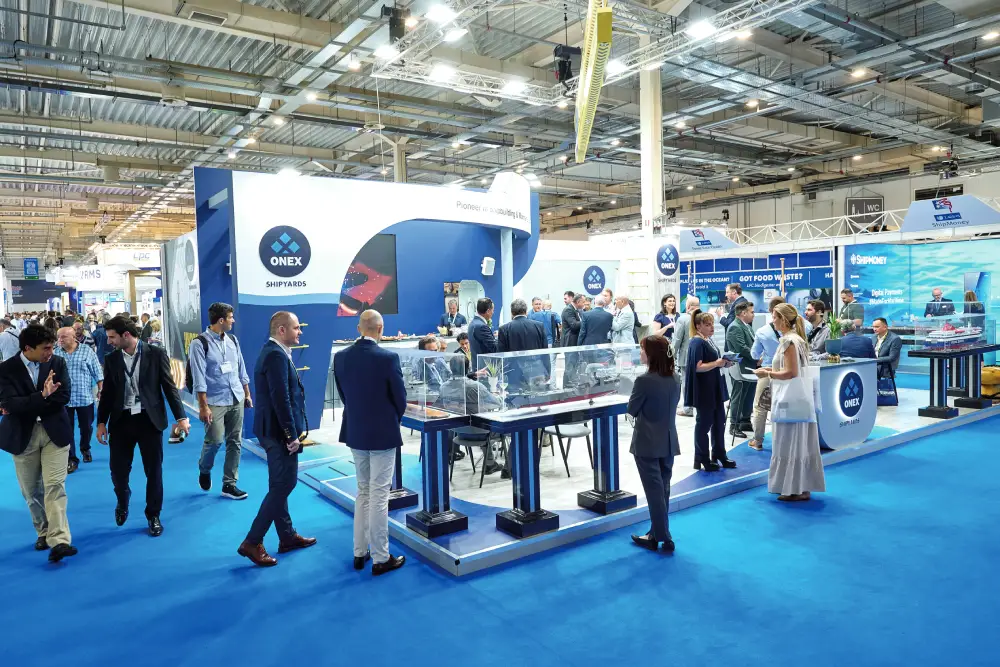
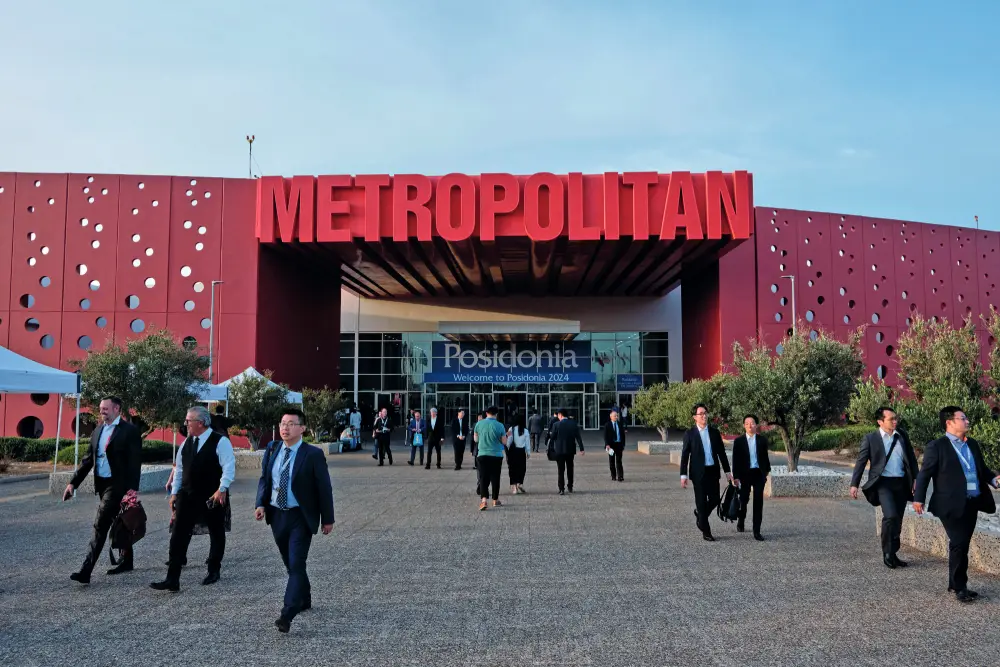
The fact that Posidonia 2026, held at the Metropolitan Expo from 1-5 June, will host a dedicated executive seminar on civil maritime nuclear propulsion signals highlights how far the conversation has evolved, especially in a country which controls roughly 20% of global merchant tonnage. While no public nuclear newbuilding orders have been announced, discussions are reportedly underway in policy and industry circles. Greek institutions, classification societies and international organisations —including the IAEA— have engaged in structured dialogue on maritime nuclear frameworks.
The conversation has already shifted, according to Charlotte Vere, Group Head of Market Development at CORE POWER, a leading developer of civil maritime nuclear propulsion and shipyard-assembled floating nuclear power plants in the OECD. “This is no longer a theoretical discussion,” she notes.
“We are seeing real engagement at government level among shipowners, banks, insurers and ports. What matters now is momentum, and that momentum is building. Recent government-to-government collaboration focused on maritime nuclear is a strong signal that serious work is underway to create the enabling conditions for deployment.”
According to Dr. George Pateras, Deputy Chairman of Contships Management, the next wave could arrive within 10–15 years, driven by fourth-generation molten salt reactors (MSRs) using thorium fuel. “The only true green solution is nuclear power,” he argues, dismissing many alternative fuels as impractical at scale. “It is not a question of being ready, but rather a question of necessity, the current alternative fuels paraded as solutions to the sustainability hype are neither practical, abundant nor safe,” he said.
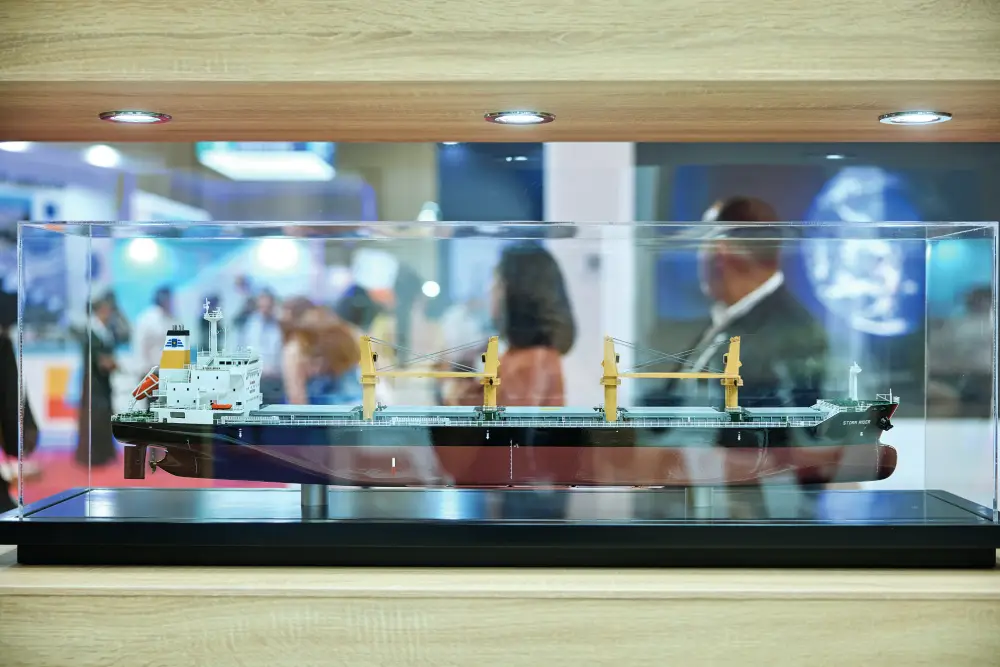
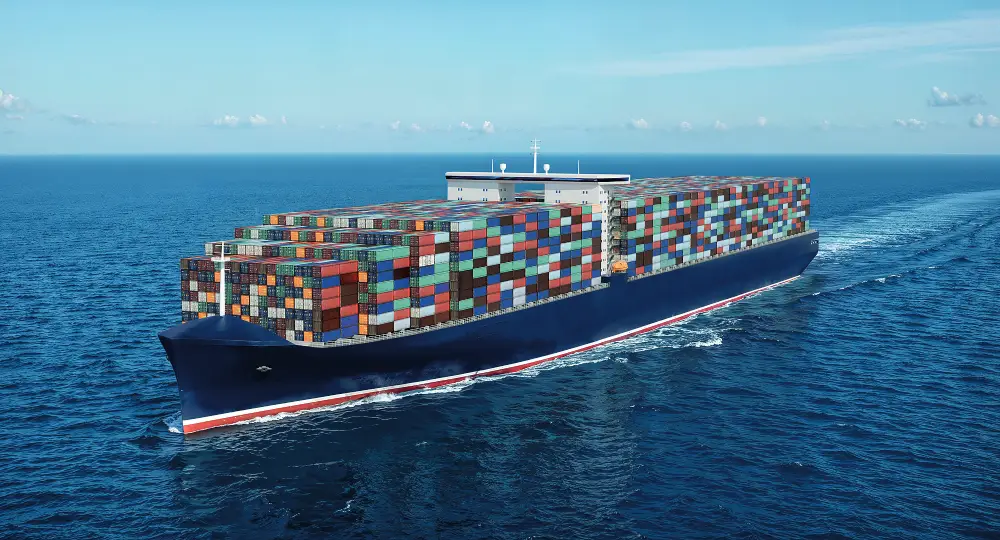
Others adopt a more cautious tone. According to a spokesperson for South Korea’s Hanwha Ocean, while this trend is noteworthy, it remains at the level of early-stage strategic assessment rather than a business decision. Samsung Heavy Industries, which is studying MSR-powered container ships and LNG carriers, similarly points to mid-2030s as the earliest plausible timeframe for commercial deployment.
Dr. John Kokarakis, Chair of SNAME Greek Section and Technical Director at Bureau Veritas’ SEEBA Zone, describes the sector as “pre-commercial but no longer hypothetical”. “Early pilot vessels could appear in the mid-2030s,” he suggests, “but broad adoption depends on regulatory, insurance and port-state alignment.”

While reactor innovation is advancing—particularly in Small Modular Reactors (SMRs) and MSRs— the principal barriers may lie elsewhere. Regulatory alignment, liability frameworks, port acceptance and insurance structures can be critical workstreams. “Insurance is often highlighted early because the sector will need clarity on civil nuclear liability arrangements that function in a maritime context,” explains Charlotte Vere.
Panos Kourkountis, Chairman of MARTECMA and Technical Director at Sea Traders S.A., stresses another enduring concern: radioactive waste. While nuclear propulsion produces no operational CO₂ emissions, waste management and long-term environmental stewardship remain politically sensitive and technically complex issues. Public perception also looms large, as the word nuclear carries a heavy legacy, despite decades of safe naval and land-based nuclear operations worldwide.

Proponents argue that nuclear propulsion offers unmatched advantages such as Zero CO₂ emissions during operation, elimination of fuel tanks and large engine rooms, stable and predictable energy costs, and high suitability for LNG carriers, ultra-large container ships and deep-sea vessels. Yet adoption hinges on economics. As Kourkountis observes, “No technology is adopted on a large commercial scale unless it is economically competitive.”
But he concludes, that “When the relevant legislation is in place and nuclear propulsion becomes technologically mature and commercially viable, Greek shipowners are expected to be among the first to place orders for nuclear-powered newbuildings”.