

Sparta the Immortal City

Timeless by nature-Legendary by Heritage
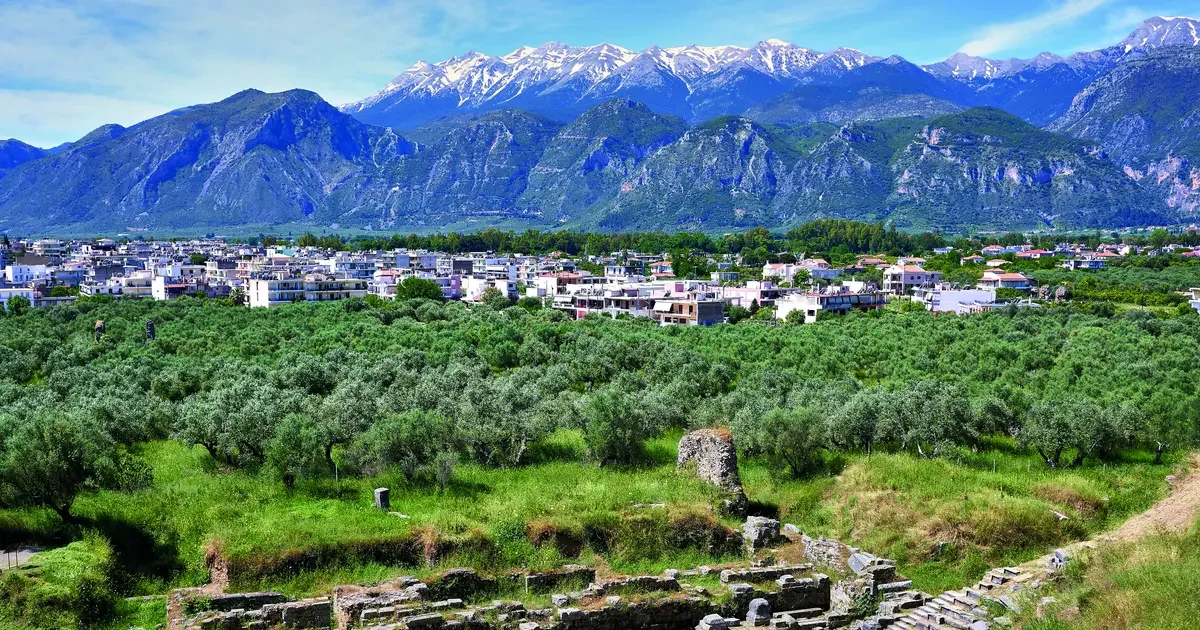
Laconia—a land of unparalleled natural wealth, renowned for its endless olive groves, distinguished wines, and exceptional citrus orchards—where Sparta stands timelessly at the crossroads of historical heritage and contemporary life. Nestled at the foot of Mount Taygetus, Sparta endures as the Eternal City, deeply rooted in time, place, and the continuity of its historical identity. While its ancient legacy shaped one of history’s most disciplined and influential civilizations, modern Sparta continues to evolve with confidence, resilience, and vision.
Sparta: From Myth to Modern Reality
As I begin my journey to Sparta, my mind constantly drifts to its extraordinary past—the legendary land of fearless warriors. Yet my true intention is to rediscover it not merely through history, but as a living, authentic, and remarkably beautiful destination.

The road to modern-day Sparta passes through one of the most captivating landscapes in the Peloponnese. Lush green plains, rolling hills, and the gentle flow of the Eurotas River accompany the traveler all the way to the city’s entrance, where Sparta unfolds peacefully beneath the gaze of its surrounding ancient landmarks.

Modern Sparta is not a relic frozen in time. It is a city shaped by successive layers of history—redesigned in the 19th century under Bavarian influence following the establishment of the modern Greek state in 1834. Yet its identity remains inseparably linked to Antiquity, Byzantium, and the Frankish era.
The city of Sparta in search of its reflection
Wide avenues, neoclassical squares, modest residences alongside more elaborate urban homes, 19th-century hotels, and post-war apartment blocks together compose the architectural fabric of the city.


Streets such as Paleologou and Lykourgou—once envisioned as elegant boulevards—now pulse with everyday movement and urban rhythm. Yet the central square, framed by its arcaded galleries, offers a moment of visual and spatial relief, a pause within the city’s contemporary pace.
Where the past and present coverge
The dialogue between antiquity and modern life becomes most vivid in the city’s cultural landscape. The neoclassical Archaeological Museum, the Acropolis of ancient Sparta, the ancient theatre, the Tomb of Leonidas, and the Sanctuary of Artemis Orthia together form a continuous thread of memory stretching across millennia.

At the Sanctuary of Artemis Orthia, once a central space for the education and discipline of Spartan youth, sacred festivals included athletic contests whose prize was a simple iron sickle—an object later dedicated to the goddess alongside stone inscriptions bearing the names of the victors.
Just south of Sparta lies Vafeio, home to one of the most significant Mycenaean tholos tombs in Laconia. Here, the legendary golden Vafeio cups, along with exquisite jewellery and weaponry, were discovered artifacts that continue to illuminate the sophistication of early Greek civilisation.
Culture and Heritage

Sparta’s cultural identity extends far beyond its ancient monuments. The Museum of the Olive and Greek Olive Oil reveals a deeper prehistoric narrative, displaying fossilised olive leaves dating back 50,000–60,000 years.

The Koumantareios Art Gallery, a branch of the National Gallery of Greece, presents a curated collection of significant artistic works, while the Museum of Ecclesiastical Art preserves rare icons, manuscripts, silverwork, and finely carved wooden artefacts spanning centuries of spiritual and artistic tradition.

During the summer months, the city comes alive through a rich calendar of cultural, athletic, religious, and commercial events. The renowned Spartathlon ultra-marathon, held at the end of September, retraces the legendary route of the ancient messenger Pheidippides. Each May, the Paleologeia festival honours Emperor Constantine Palaiologos with theatrical performances, concerts, and cultural tributes.

From late August to early September, the Mistras fair transforms the region into a vibrant gathering, culminating in the religious celebration of the Beheading of Saint John the Baptist. In late October, the mountain village of Geraki—nestled at 1,000 metres on Mount Taygetus—hosts the traditional Tsipouro Festival, celebrating local produce, wine, and authentic Laconian hospitality.

Every October, Sparta hosts the internationally renowned Spartan Race, one of the world’s premier obstacle course racing series.