
“10 years alongside people living with cancer and their caregivers” – Pisti Krystallidou, President of WINCancer

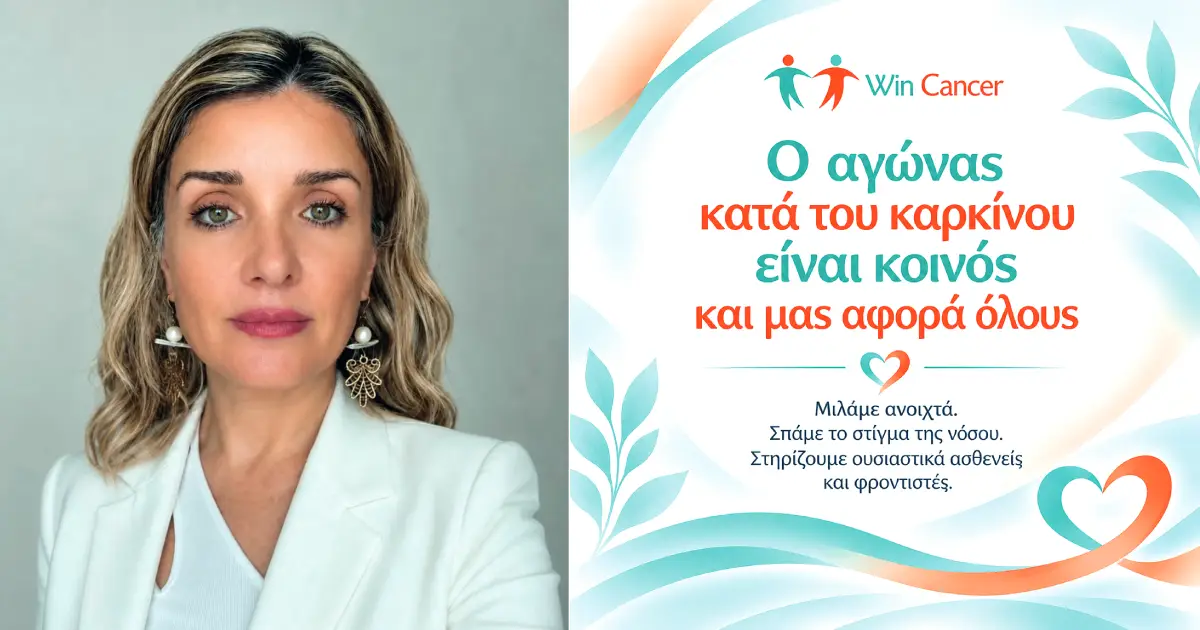
Medicine has made enormous strides against cancer. Yet, some things cannot be treated with one drug: stigma, the loneliness of the caregiver, words that wound, the return to life after treatment. Pisti Krystallidou, President of the non-profit organisation WinCancer, chooses to speak mainly about these things and everything that surrounds the disease but often shapes a person’s life just as much.
We talk a great deal about the patient. Where does the caregiver fit into this story?
Usually one step outside our field of attention, when in reality they are right inside the illness. They are the ones who organise, wait, fear and endure. And because “the other person is the patient,” we assume caregivers must always be strong, which is far from a given. Caring for the caregiver must become part of oncological care. We need to learn to ask them: ” how are you?”
Does stigma around cancer still exist?
Yes. It shows up in a look, in awkwardness, in the fear of speaking up at work. A person has cancer; they are not their cancer. No diagnosis can swallow our entire identity.
Is that why you also speak so much about the power of words?
Words shape perceptions: “the dreaded disease,” “lost the battle,” “was defeated.” If someone dies of cancer, does that mean they didn’t try hard enough? We never wanted “The Power of Words” to remain just a WinCancer campaign. Together with ELLOK, the Athens Journalists’ Union (ESIEA), the General Secretariat for Information and Communication, and the academic community, we opened a conversation about a more humane public discourse. Not out of political correctness, but out of respect for the person who is ill.
The Right to Be Forgotten is perhaps the most literal form of this change.
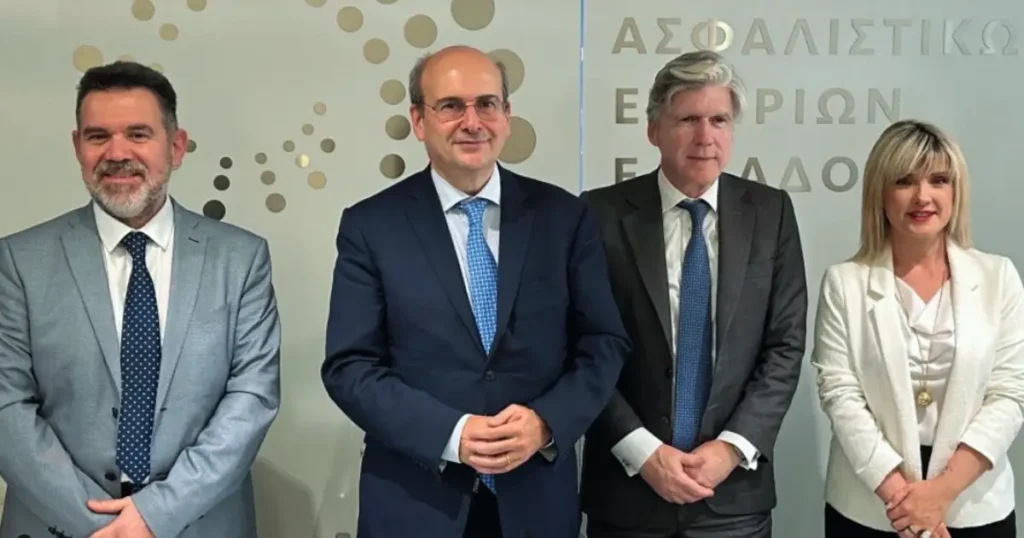
It is the right not to be followed forever by an old diagnosis: to be able to get insurance and to plan your life anew. Here we must acknowledge the great work of ELLOK, which launched this cause and kept it alive. WinCancer stood by its side, together with patient organisations. ELLOK’s cooperation with the Ministry of National Economy and Finance and the Hellenic Association of Insurance Companies first led to a Code of Conduct, and the right is now enshrined in law. For me, the essence fits into four words: you were treated; you are entitled to move on.
“It’s Not Shameful” touches on a different kind of stigma.
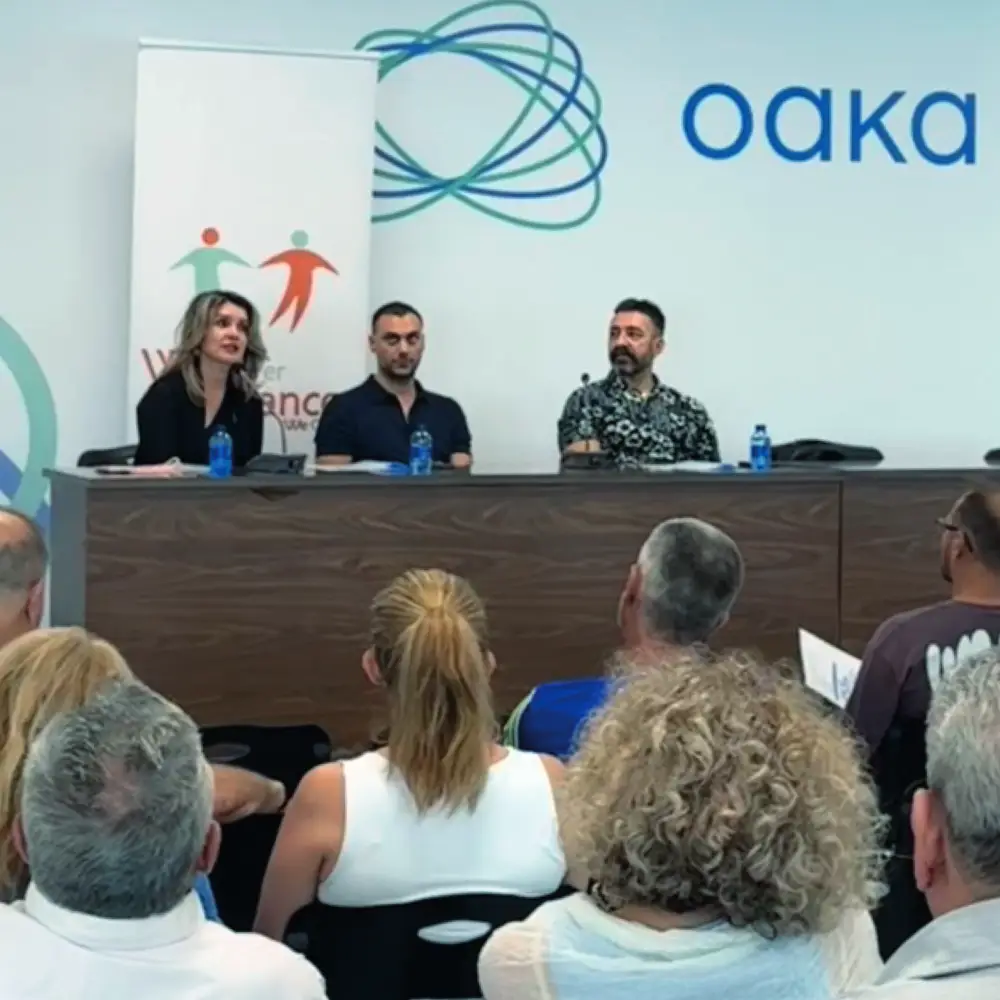
There are cancers we still don’t talk about openly. We started with testicular cancer, self-examination, and the fear of asking for help. With the scientific support of ICPS College, and in collaboration with Urban Rail Transport S.A., Water Supply and Sewerage Company and OAKA, we took this conversation into workplaces. Sometimes shame delays an examination, and in cancer, early diagnosis is the greatest weapon we have.
And yet one of your biggest initiatives rests on a Christmas card.
“Visit of Love” returns this year for the seventh time. Thousands of children write to people who will spend Christmas in oncology hospitals. I like to think about the moment before a card is written: a child sits down and thinks about someone they don’t know. That is a lesson in empathy. And I believe it is an important tool for breaking the stigma of the disease.
Your podcasts put on the table what we find hard to say.
That is why they exist. There are no “right” answers, only the lived experience of people who have faced cancer, whether as patients or as caregivers. Search for “The Battle Diary” on your podcast platforms; you will find truly remarkable stories, and perhaps even the meaning of life.

How are the “Breathing Libraries” developing?
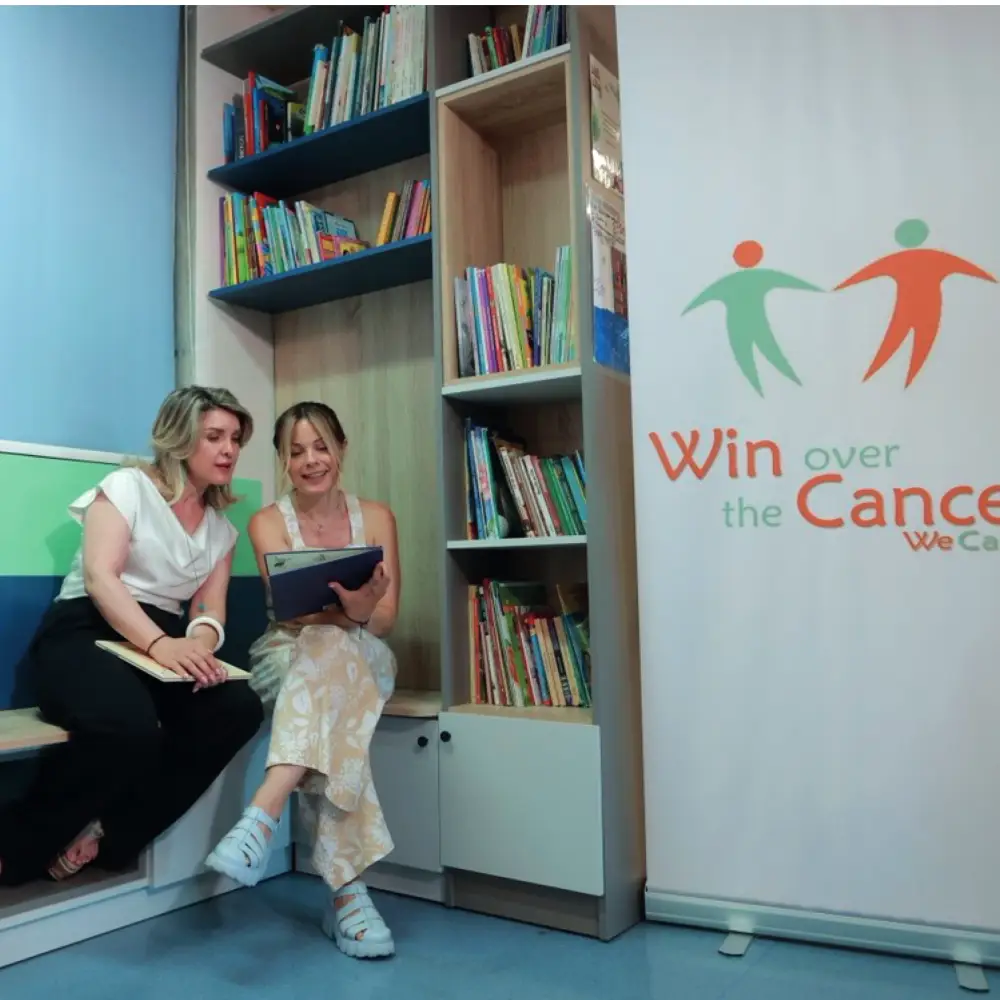
They began as small book corners inside hospitals. Today there are 12 in hospitals across the country, and we have taken the next step: the Mobile Breathing Library, in cooperation with the National Documentation Centre and the “Agios Savvas” and “Metaxa” oncology hospitals, through the “Oikothen” programme. Books no longer wait only for patients in the hospital. They now reach them at home too.
WinCancer turns ten this year. How would you like to celebrate?
On 27 November, we want to say “thank you” to the people who believed in WinCancer: our volunteers, our partners, our donors. The evening will take place with the support of the Stelios Foundation, which has stood substantively by our side in recent years. Anyone who feels that what we do concerns them is welcome to join us. WinCancer’s ten years belong to everyone who became part of them.
What is WinCancer ultimately trying to change?
To remind us of something simple: what stands before us is not just a diagnosis. It is a person with a job, relationships, fears, desires, a family and plans. And around them are people who also need support. Because it is not enough to treat the cancer. We must also care for the person.
Thank you very much!