
Redefining Greek Culture

The inspiration to articulate my thoughts on culture in Greece came after a profound conversation with our internationally acclaimed sculptor and founder of the “Art and Science Center,” Ms. Mara Karetsos.
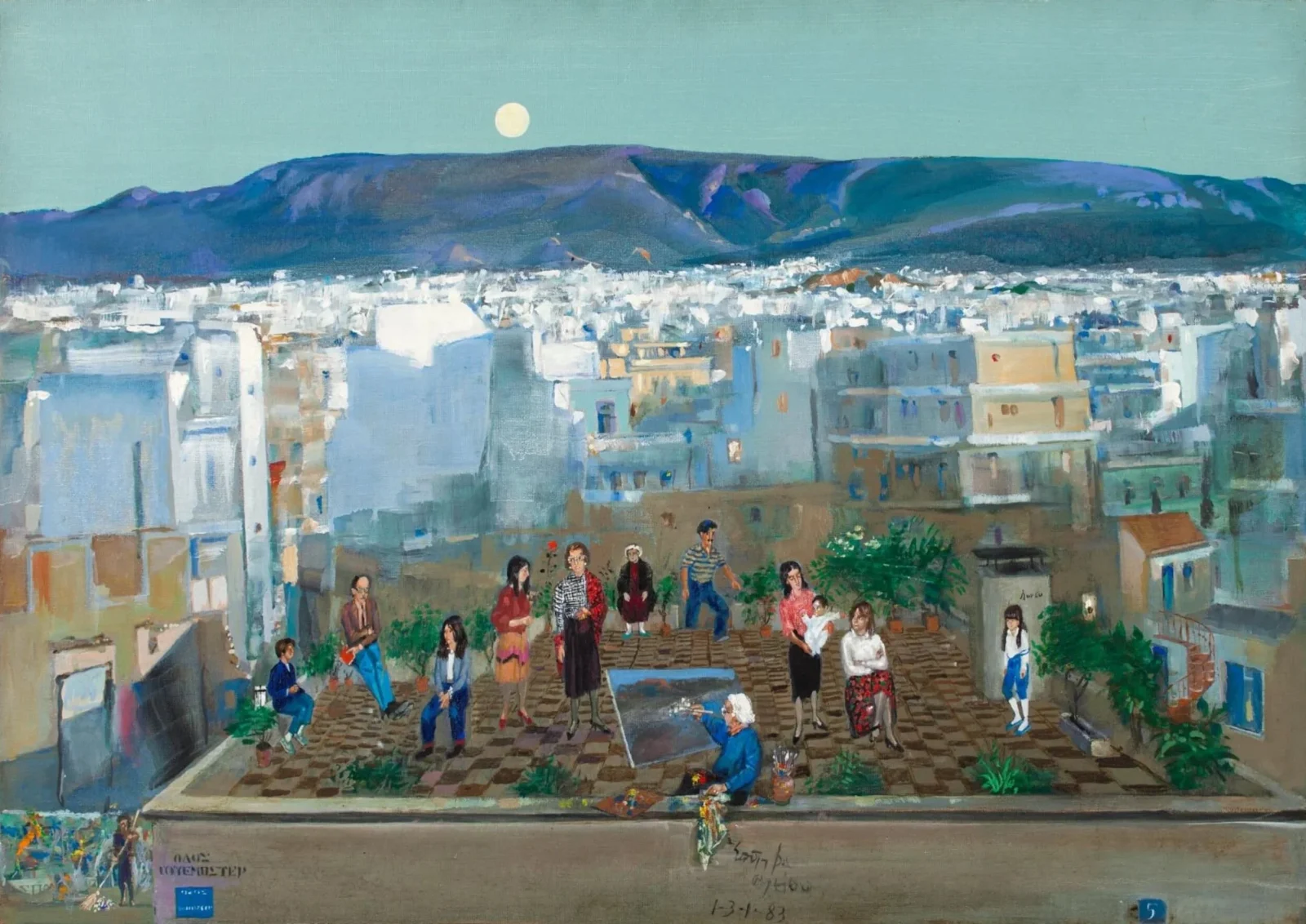
In a country where history does not simply weigh upon the present but actively defines it, culture and art exist in a constant negotiation with themselves. Greece does not suffer from a lack of culture; it often suffers from the way it perceives it. Surrounded by monuments, narratives of a glorious past, and an almost obsessive attachment to heritage, contemporary artistic expression is called upon to prove that it is not merely a continuation—but a rupture. For years, art in Greece was treated as an extension of history: respected, yet harmless. Today, however, a new generation of creators rejects this role.
Working at the margins, amid limitations and often outside institutions unable to support them, they are redefining what it means to produce culture within a landscape of contradictions. And yet, the paradox remains: the more Greece promotes its cultural identity internationally, the more it struggles to invest meaningfully in its living expression. Art often becomes a tool of image rather than substance—a showcase that serves narratives instead of opening real dialogue. In this context, the most compelling voices emerge not from centers of power, but from the periphery: independent spaces, self-organized initiatives, and hybrid platforms that do not wait for permission to exist.
The digital age accelerates this shift. Access is democratized, boundaries dissolve, and the notion of what is “Greek” takes on new, more fluid dimensions. Art is no longer geographically confined; it becomes a participant in a global ecosystem. The question is no longer whether Greece can produce contemporary art, but whether it is ready to recognize it as equal to its past. At this turning point, culture is not a luxury—it is an act of survival. It is how a society processes its fractures, redefines its values, and ultimately imagines its future.
Perhaps, in the end, the real challenge is not the preservation of our cultural identity, but its liberation. And in this process of liberation, the role of sponsors cannot remain opportunistic. Meaningful support for emerging artists does not lie in fragmented funding or superficial partnerships; it requires long-term commitment, trust in the process, and an acceptance of the risk inherent in authentic creation. Sponsors are called upon not to act as curators of content, but as catalysts—creating the conditions in which artistic voices can develop freely, without censorship or the need to conform to predefined narratives.
Investing in new art is not an act of charity—it is an investment in thought, innovation, and ultimately, social cohesion.
When emerging creators are given the space to experiment, fail, and return stronger, a culture is born that is alive, resilient, and truly contemporary. Otherwise, art risks remaining trapped between what once was and what is merely permitted to be.

If Greece wishes to speak about culture in the present—and not only in the past—then supporting new artists must become a priority, not as a narrative, but as a practice.