

Ritsa Masoura – Loves of the Soul and the Heavens

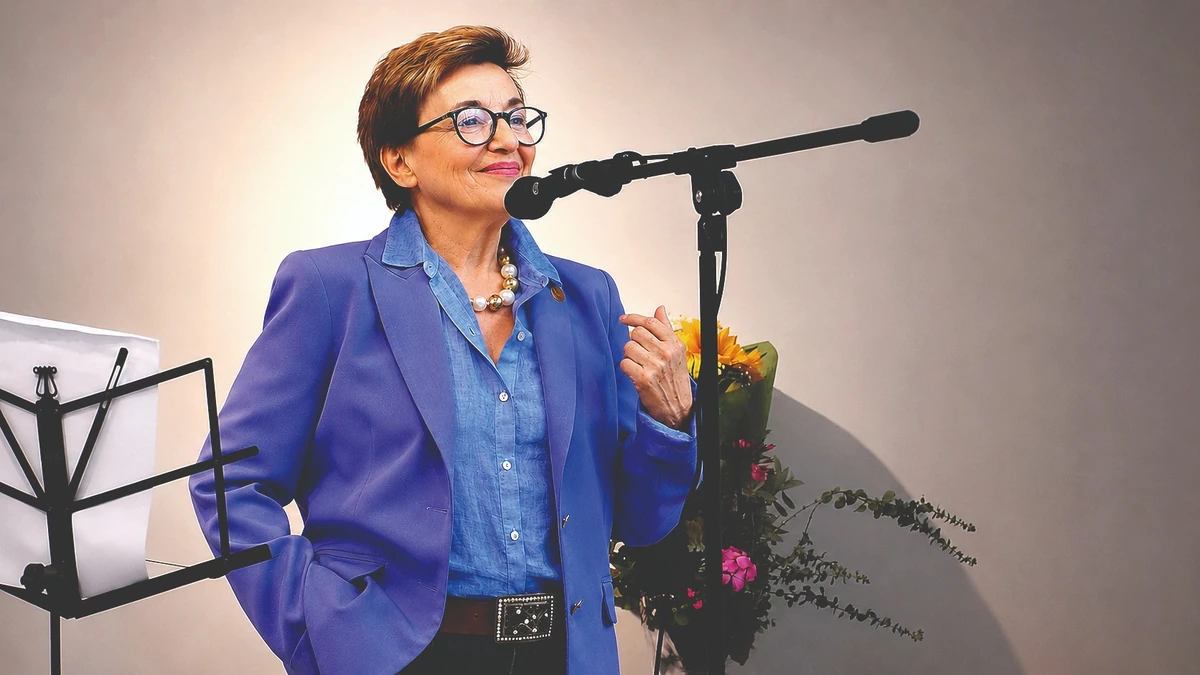
Ritsa Masoura belongs to that rare category of individuals who move with natural ease between two worlds: the hard realism of journalism and the inner, existential necessity of poetry. With a long-standing presence in both print and digital media, including her work for the newspaper Kathimerini and the Hellenic Broadcasting Corporation (ERT), she has served international and political reporting with precision and intensity, documenting events, individuals, and historical moments with a clear and discerning gaze.
Today, having shifted the focus of her creative work toward literature, she offers a more personal voice: the poetic one. Her collections shape a poetic universe where memory, love, loss, and existential inquiry coexist with an inward, melodic, and reflective style of writing.
On the occasion of her latest poetry publication, this conversation seeks to illuminate the transition from journalistic reporting to poetic confession, while also highlighting her enduring relationship with language as a tool for understanding both the world and the self.
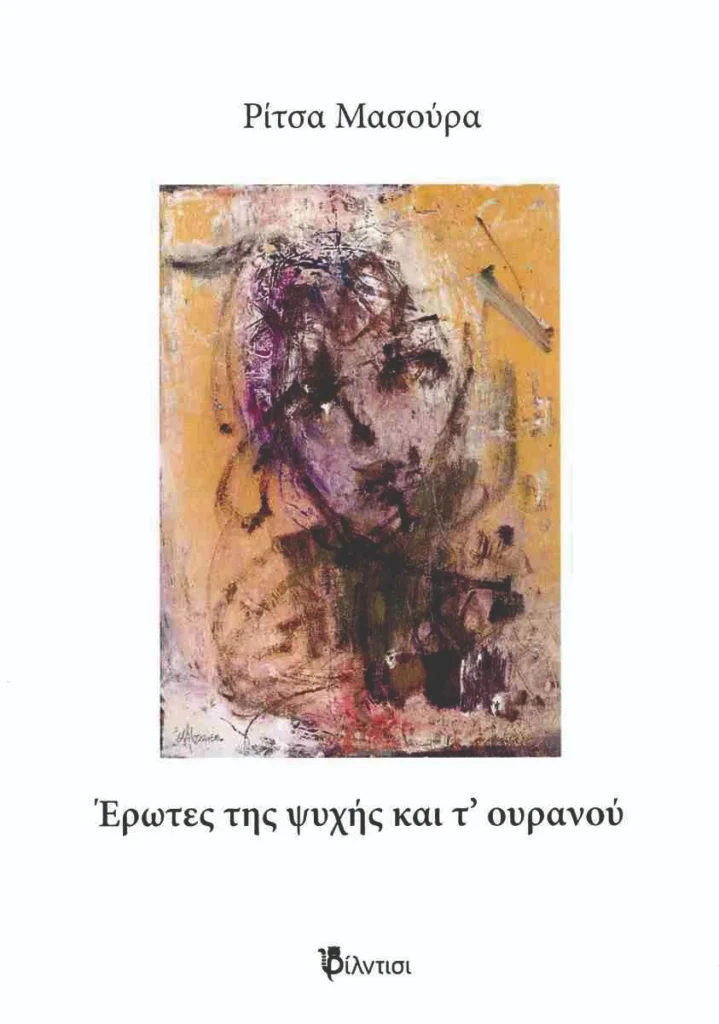
How does the “voice” of a poet evolve when they have previously served the language of journalism?
I suppose journalism helped me avoid verbosity and empty grandiloquence. It taught me to seek precision in words. Poetry, on the other hand, allowed me to move beyond events and explore emotions, silences, and contradictions that cannot fit within a news report.
Is there a moment or period that served as a starting point for your poetic writing?
I have been writing since I was young, though I was not publicly exposed as a writer then. Poetry, in a more subterranean way, was always present in my life, even when my professional routine was extremely demanding. In recent years, however, I felt a greater sense of freedom to turn toward it and give it more space. There was no specific event; rather, it was a gradual maturation.
Isn’t it too romantic, in an age of speed and information, to be a poet?
Not romantic—rather, something more necessary. A form of defence, in some cases even a kind of enclosure. We live in an era of overwhelming information, but not necessarily deeper understanding. Poetry allows us to slow down, observe, listen, and reconsider our existence in its stronger or more fragile forms. Why not? When poetry is offered to others, it is not offered as healing, but as a need for inward immersion, regardless of outcome. And that, I believe, is a compelling dimension.
In your poetry, themes such as love, memory, and existential anxiety frequently appear. Which of these feels most “necessary” for you to express?
I would say memory—not in its nostalgic sense, but as an attempt to understand our journey. Love and existential anxiety are present, but memory often functions as the great connective thread. Through it, we try to understand who we have been and who we are becoming.
“Wherever I go, I find that a poet has been there before me,” said Sigmund Freud. What is your view?
I would agree. Poets often intuitively approach areas of human experience that science, philosophy, or psychology later attempt to interpret. Poetry does not explain the world. It illuminates it from a different angle.
Is there a poet you love who has influenced you?
I love many poets, and it would be unfair to name only one. Cavafy, Seferis, Elytis, Ritsos, Sachtouris, Anagnostakis, Christopoulos, as well as Eliot and Dylan Thomas, are among my favourites. In particular, Dinos Christianopoulos—“those who troubled us weigh heavier…”—and Manolis Anagnostakis spoke to me deeply. Of course, I have my own concerns and longings, which I imprint on the page, but I always seek the questions that great poets, directly or indirectly, pose.
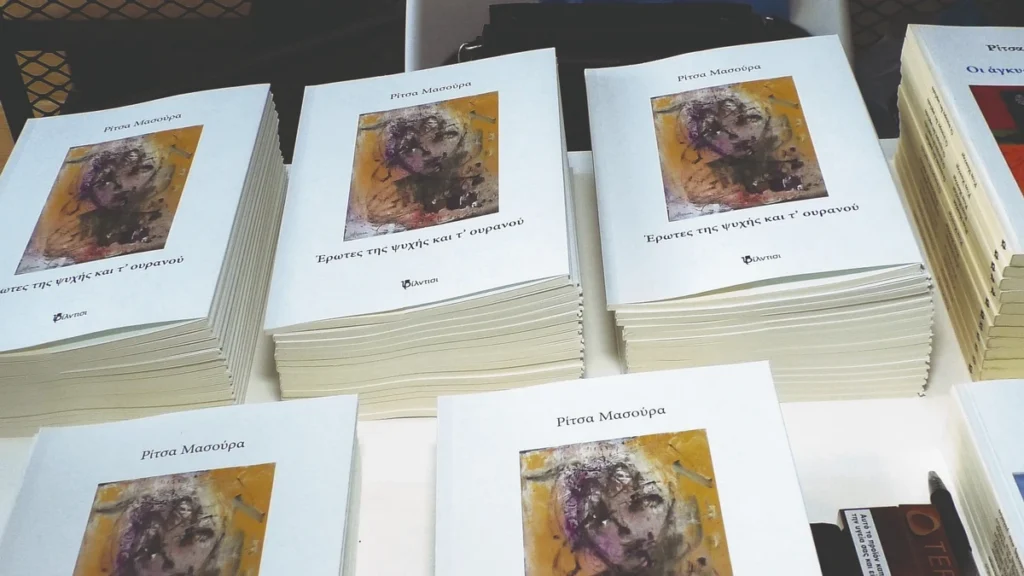
How would you describe your new poetry book to a reader who does not know you?
I would say it is a poetic journey between love, memory, loss, and the search for meaning. It is an attempt to converse with everything that shapes us and accompanies us through life, even when we believe we have left it behind.
Tell me a line from your poetry.
I would prefer not to isolate a single line from a whole poem. But if I had to summarize the feeling that runs through my work, I would say it speaks of those things that are lost, yet continue to live within us.
Thank you!