

Mavroudes Troullos – The Greek Bassoon Virtuoso

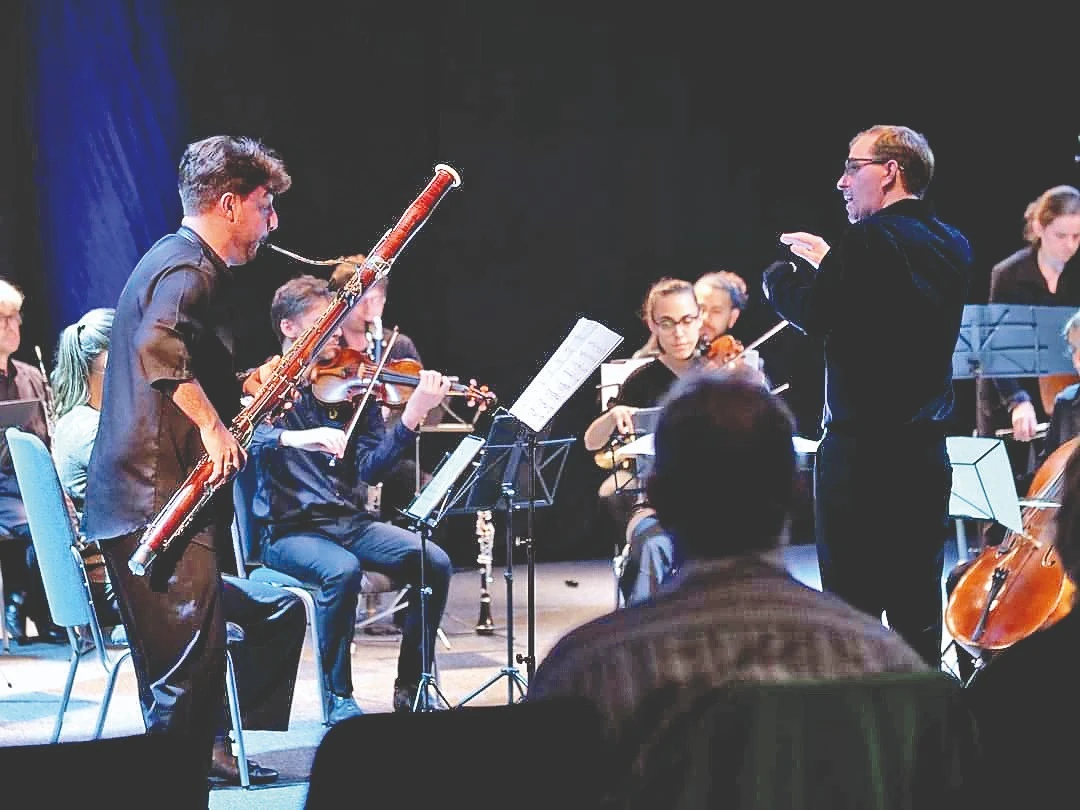
In the world of classical music, few artists leave such a distinctive personal mark as bassoonist and PhD researcher at LUCA School of Arts, Mavroudes Troullos. Born into a musical family, he has gained recognition for the sensitivity and depth of his artistic voice.
With reviews from Crescendo Magazine describing him as “a musician of great sensitivity” and from the International Double Reed Society as a bassoonist with a “highly distinctive and multifaceted playing style,” he has appeared as a soloist as well as with orchestras at major festivals across Europe.
His studies in Athens, Leipzig, Brussels, and Vienna reflect a distinctly European artistic path. His discography includes world-premiere recordings with harpist Rachel Talitman, and more than fifteen contemporary works have been dedicated to him.
From Greece and Cyprus to Europe’s most prestigious music stages: what were the defining moments that shaped your journey?
I began music in Cyprus at a very young age with my parents, and the bassoon came later at my father’s encouragement. A decisive milestone in my development was the musical education I received with Georgios Farouggias at the Athens Conservatoire, Jörg Michael Thomé in Leipzig, and Luc Loubry in Brussels. Beyond my teachers, an important influence—both then and now—has been my collaboration with artists such as Lily Maisky and Rachel Talitman.
The bassoon is rarely at the centre of public attention. How did you manage to build an international career with such a distinctive instrument?
The idea of a “career” has always been something that intimidates me. And yes, especially with an instrument like the bassoon, it is not always easy. However, music is an art form that, in a sense, involves a level of “high-performance discipline” when one seeks to serve it at a high level—regardless of the instrument.
I believe that when artistic expression is authentic and meaningful, the instrument itself simply becomes the medium of communication.
You have performed in leading concert halls and with major ensembles across Europe. Which moment do you consider a milestone in your artistic journey, and why?
In halls such as the Royal Albert Hall or the Concertgebouw in Amsterdam, you truly feel the history and energy. As a milestone, I would highlight the moment I performed at the Konzerthaus Berlin with my dear friend and collaborator Lily Maisky. However, every great hall offers something unique. For me, the most meaningful moments are those in which I feel time stops and I can breathe within the music. There are evenings I remember not for their “technical perfection,” but for the intensity and truth of the moment on stage.
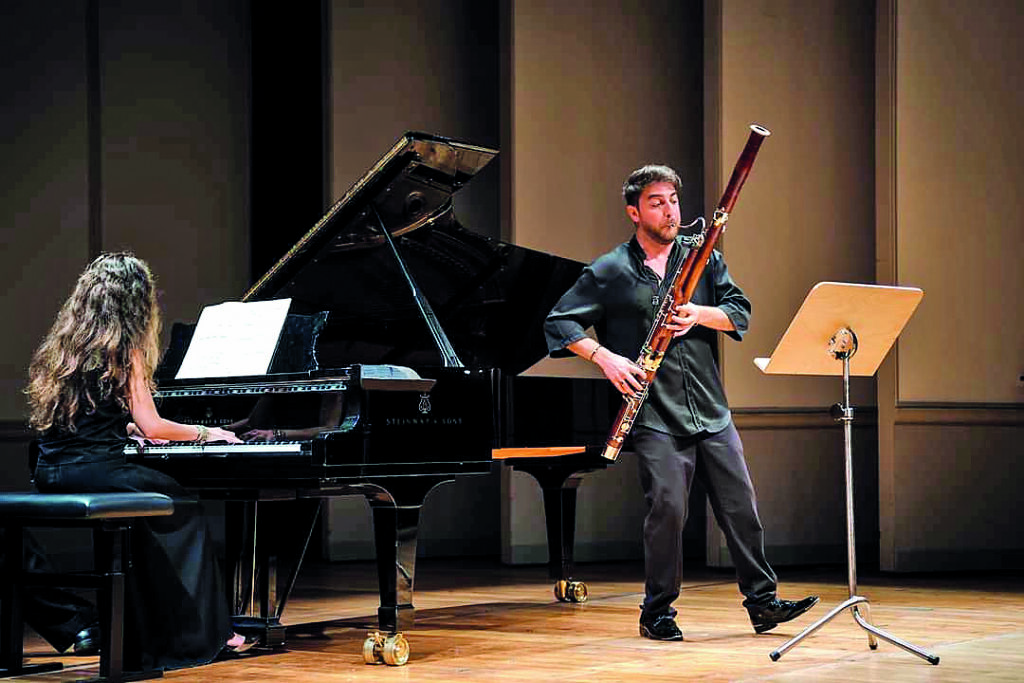
Your research focuses on the new expressive possibilities of the bassoon. What are you aiming to contribute to its international literature and practice?
My research focuses on highlighting the contemporary technical and expressive possibilities of the bassoon, expanding the boundaries of its traditional role. My goal is to document, analyse, and propose modern interpretative approaches that can be used both by performers and composers.
I believe the mission is not only to preserve tradition, but also to actively contribute to shaping the future of classical music. I would like to further strengthen the position of the bassoon in contemporary musical creation and offer new tools of expression.
What is the role of contemporary music in your work, and why is it important for artists to invest in new repertoire?
Contemporary music plays an important role in my work, as it allows me to explore new expressive and technical possibilities of the bassoon. With composers such as Philippe Hersant, we were not only required to contribute to the creation of new repertoire, but to shape something that responds to the demands and stimuli of the contemporary world. Performing existing repertoire alone is not enough to express today’s artistic inquiries. I believe musicians have a responsibility to invest in new works, as this is how classical music remains alive and continuously evolving.
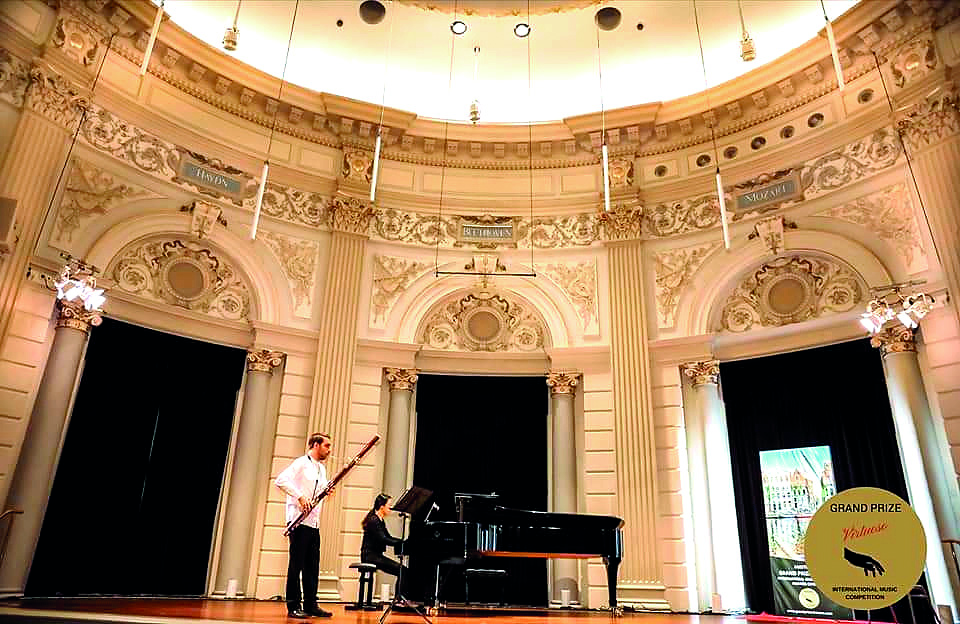

Living and working in Belgium, how do you perceive the position of a Greek musician within today’s European cultural landscape?
Greece possesses a profound cultural heritage that continues to inspire and attract international interest. For instance, when I was invited by the Festival de Radio France in Montpellier to perform a contemporary work, I asked Hersant to dedicate a solo bassoon piece to me. His inspiration came from the ancient Greek tragedy Ajax by Sophocles, incorporating in the work the lament of Tecmessa—one of the oldest surviving melodies known today.
In today’s Europe, and particularly in Brussels, multiculturalism and the exchange of ideas are fundamental aspects of artistic life, allowing me to contribute meaningfully through my own identity. I believe our role is not only to represent our country, but through art to foster dialogue, collaboration, and mutual understanding—values that are especially relevant in today’s European reality.
As a performer, researcher, and educator, what do you consider the most important legacy you would like to leave for future generations of musicians?
If I ever manage to leave something behind, I would like it to be a sense of continuous exploration and artistic integrity. I believe music is not only technical excellence, but also deeply human expression, creativity, and communication. I would like young musicians to have the courage and freedom to explore, question, and shape their own artistic path.
If you had to explain why Mavroudes Troullos stands out in today’s classical music world, what would you say?
I don’t know. My first thought in response to your question is what Oscar Wilde once said: “Be yourself; everyone else is already taken.”
Thank you so much!
What's Your Reaction?