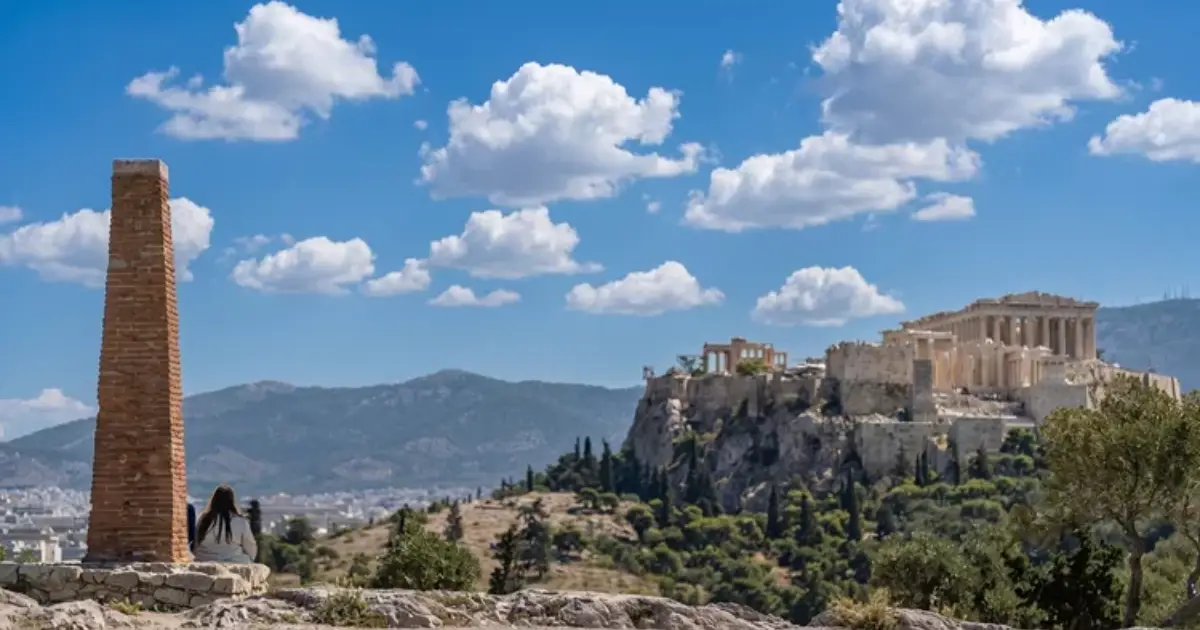
The speech delivered by US Secretary of State Marco Rubio at the Pnyx, the place where ancient Athenians gathered to debate and make decisions on matters of public interest, gave me pause for thought.
What does it really mean for us, modern Greeks, to be the heirs to this history of artistic achievement, scientific discovery, political thought and philosophical inquiry? Are we worthy of the intellectual legacy our ancestors left us, or have we learned to invoke it more often than we strive to embody it in our daily lives? It took a “foreigner” to remind us of the value of our own heritage. Knowledge. Justice. Freedom. Courage. Patriotism. Virtue.
How have we carried this legacy forward? Let me tell you. We have adorned our libraries with the works of Greek philosophers, yet we continue to sustain an education system that prioritises the accumulation of knowledge over the cultivation of critical thinking, the shaping of character and the ability of young people to distinguish what is essential from what is superficial.
We have learned to take pride in our past without asking ourselves what we are creating for the future. We are not in danger of losing our history, because no one can take it away from us. What we do risk losing, however, is our connection to the values that gave it meaning: excellence earned through effort; meritocracy that recognises genuine worth; responsibility that comes with freedom; and democracy that demands active citizens rather than passive spectators.
The essence of our civilisation lies not only in the monuments we preserve, but, above all, in the values that guide the way we choose to live. Greece does not need to keep recounting what it once was. It needs to ask itself, with courage, what it wants to become. Because the legacy of a great civilisation is not merely a source of pride. Above all, it is a measure of responsibility.