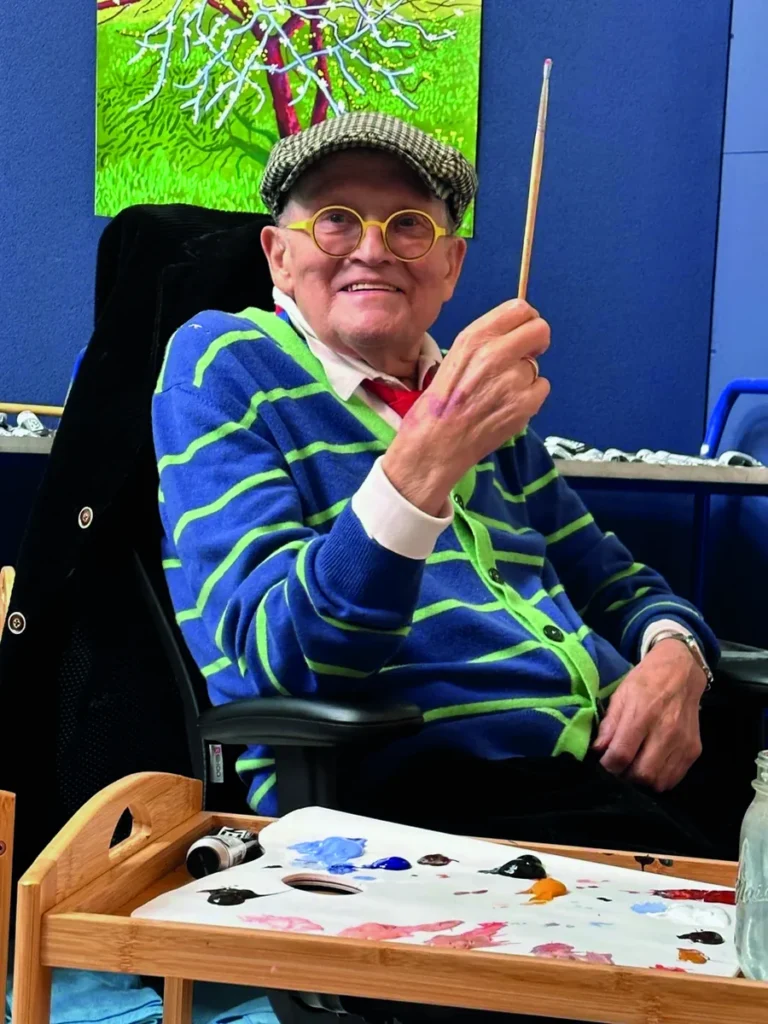
David Hockney was one of the most important and widely recognised British artists of the 20th and 21st centuries. A painter, draughtsman, photographer and stage designer, he left an indelible mark on contemporary art through a creative career spanning more than seven decades.
His Own Vision of Pop Art
Hockney became associated with the British Pop Art movement of the 1960s, yet his work was never confined by its boundaries.
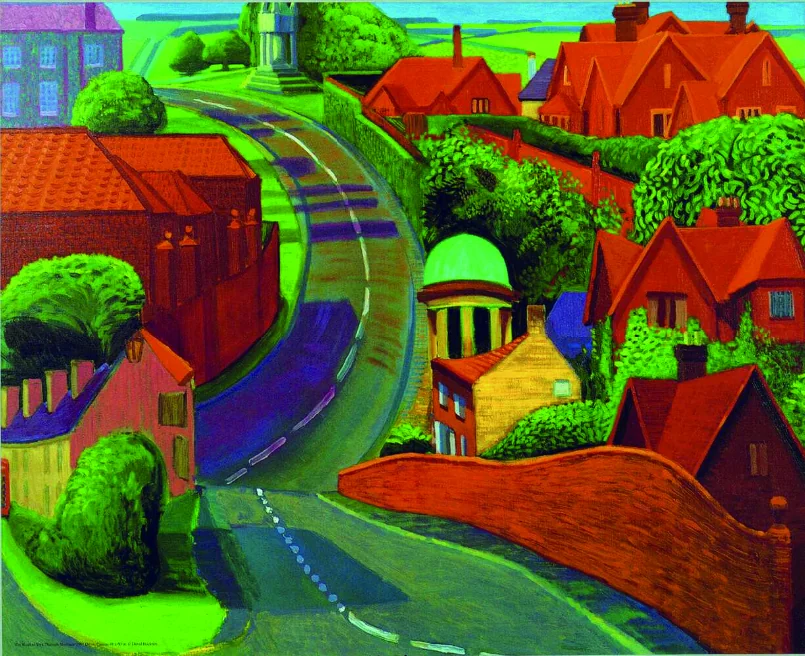
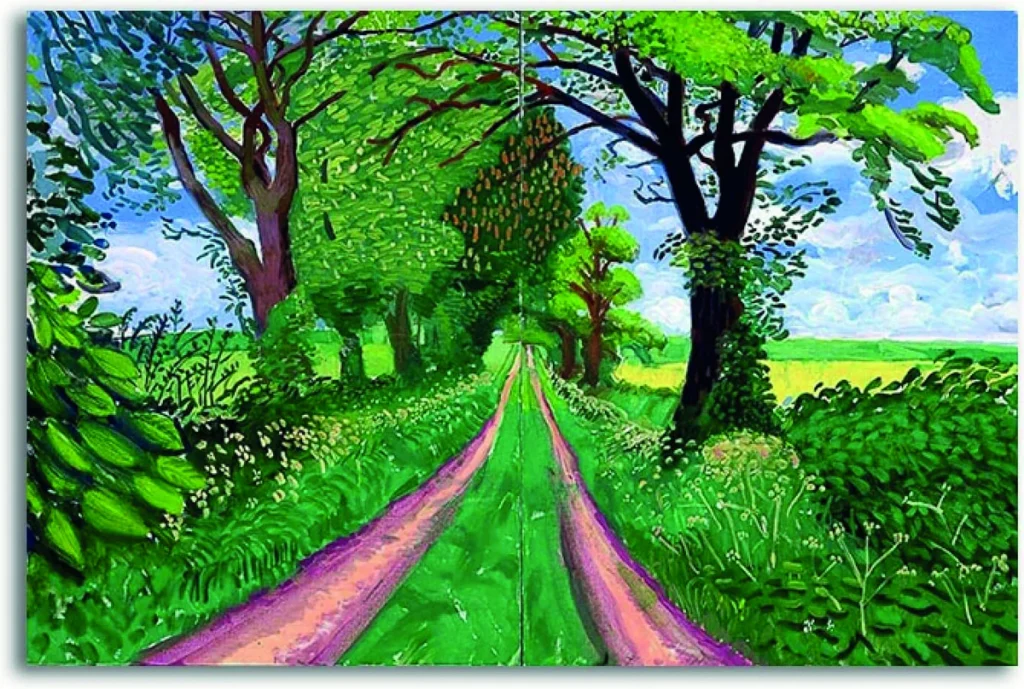
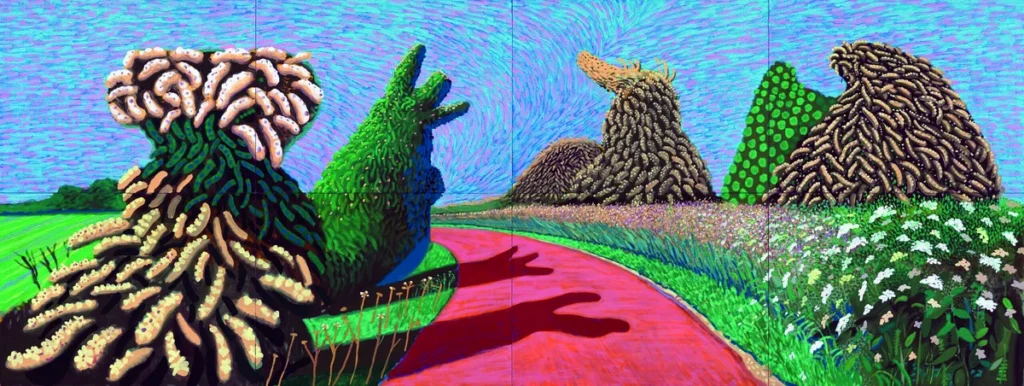
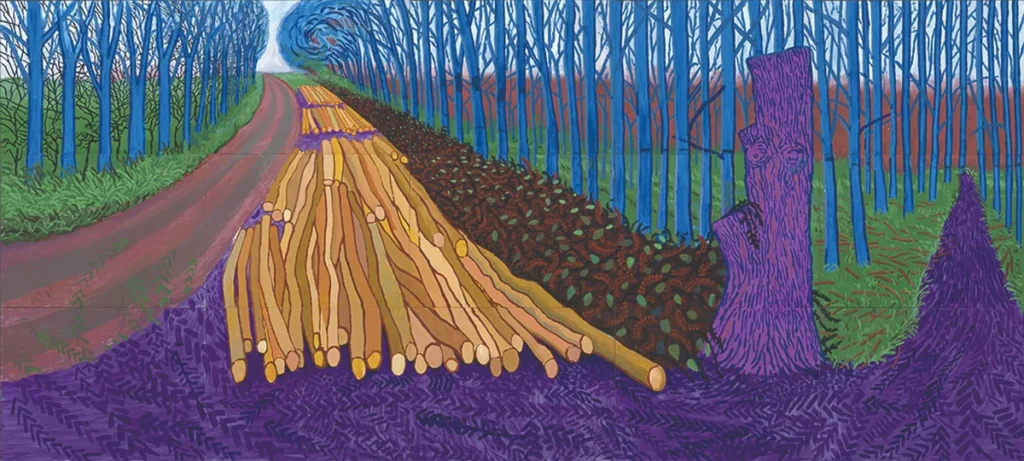
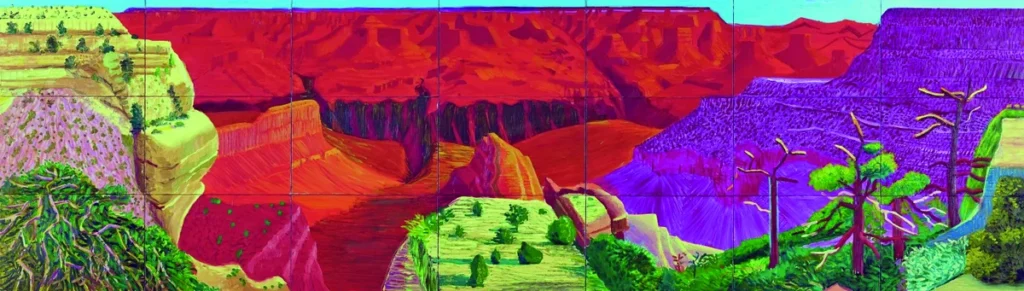
His painting developed an instantly recognisable identity: vivid, luminous colours, clean lines, bold contrasts and a distinctive approach to perspective and space.
Portraiture held a special place in his work.
Hockney observed the people around him with remarkable insight, capturing not only their appearance but also something deeper about their personalities and relationships. And what can be said of his colours?
Rich, radiant and often unexpected, they came together in uniquely harmonious and captivating combinations.
From Bradford to the Light of California
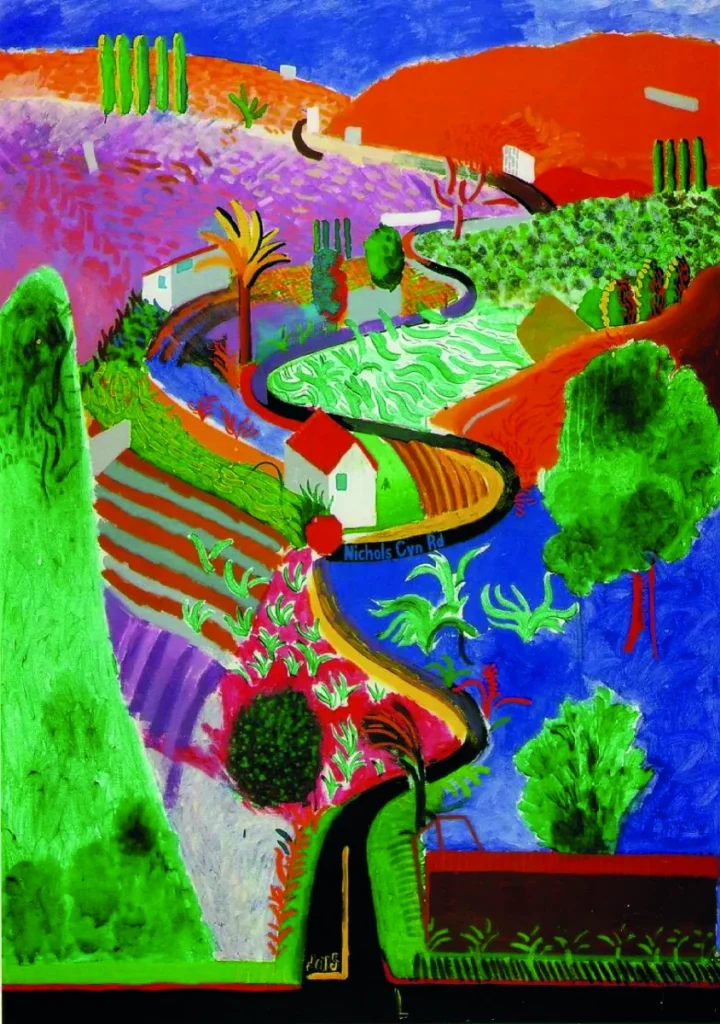
Born in Bradford, England, in 1937, Hockney studied at Bradford College of Art before attending London’s prestigious Royal College of Art. In the early 1960s, he visited California and settled in Los Angeles, a city that would profoundly influence his work.
The swimming pools, dazzling sunlight, architecture and lifestyle of Southern California became integral elements of his visual identity.
Although primarily associated with Pop Art, Hockney’s early works reveal influences from various artistic movements and artists of his time, including Francis Bacon.
For a brief period, he also taught art. He taught at the University of Iowa in 1964, the University of Colorado Boulder in 1965, UCLA in 1966 and 1967, and the University of California, Berkeley, in 1967.
Landscapes, Light and Colour
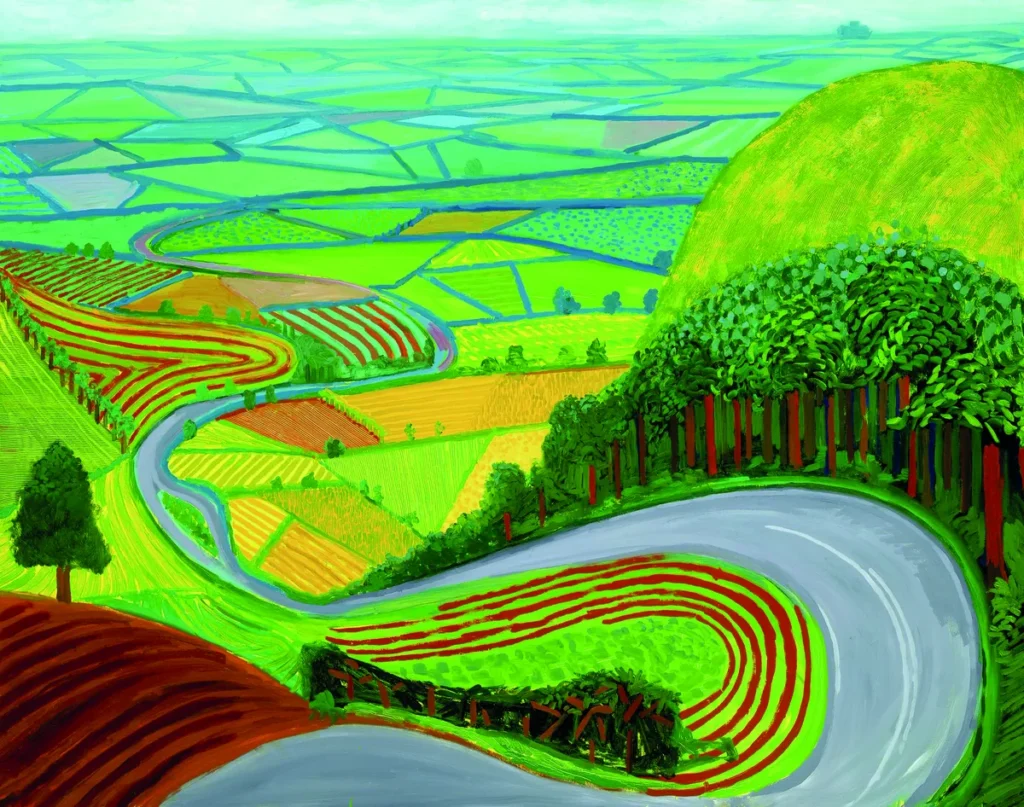
For long periods, Hockney divided his life between California, London and, later, France. Landscape became another significant chapter in his artistic journey, inspiring compositions filled with energy, light and extraordinary combinations of colour.
In Constant Evolution
Hockney never stopped experimenting. From painting and drawing, he moved into photography, creating his celebrated photographic collages, known as “joiners”, through which he explored multiple viewpoints and new ways of perceiving space and time. He also embraced new technologies with enthusiasm. Between 2010 and 2014, he experimented with video and multiple-camera systems — using between three and eighteen cameras — to record a single scene simultaneously from different perspectives.
From London and Paris to New York
Throughout his long international career, Hockney participated in hundreds of solo and group exhibitions. His work was presented at some of the world’s leading cultural institutions, including the National Portrait Gallery, the Royal Academy of Arts and Tate Britain in London, the Centre Pompidou in Paris, and the Metropolitan Museum of Art in New York.
The $90.3 Million Record
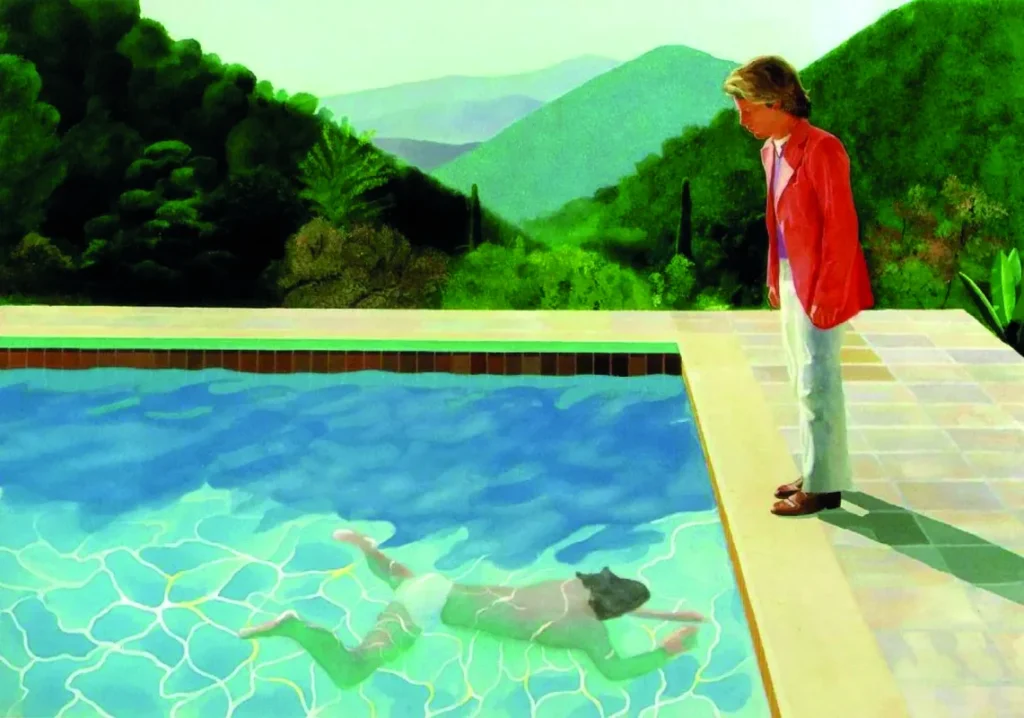
In 2018, his iconic painting Portrait of an Artist (Pool with Two Figures) sold at Christie’s for $90.3 million, setting, at the time, a world auction record for a work by a living artist.
Seventy Years of Creativity
One of the largest retrospectives of his career, David Hockney 25, was presented at the Fondation Louis Vuitton in Paris in 2025. More than 400 works, spanning the years from 1955 to 2025, told the story of seventy years of uninterrupted creativity. Paintings, drawings, photographs, digital works and video installations came together to portray an artist who never ceased searching for new ways to see and represent the world.
A Legacy in Colour
David Hockney died on 11 June 2026, at the age of 88, leaving behind an immense artistic legacy.
Paying tribute to him, King Charles III described Hockney as a “giant of the world of art and painting”, honouring a creator who influenced generations of artists and transformed the way we perceive colour, imagery and perspective.
And perhaps this is his greatest legacy: a world that, through his eyes, became brighter, more colourful and more alive.