

Delacroix’s Painting Comes to Messolonghi for the First Time for the 200th Anniversary of the Exodus

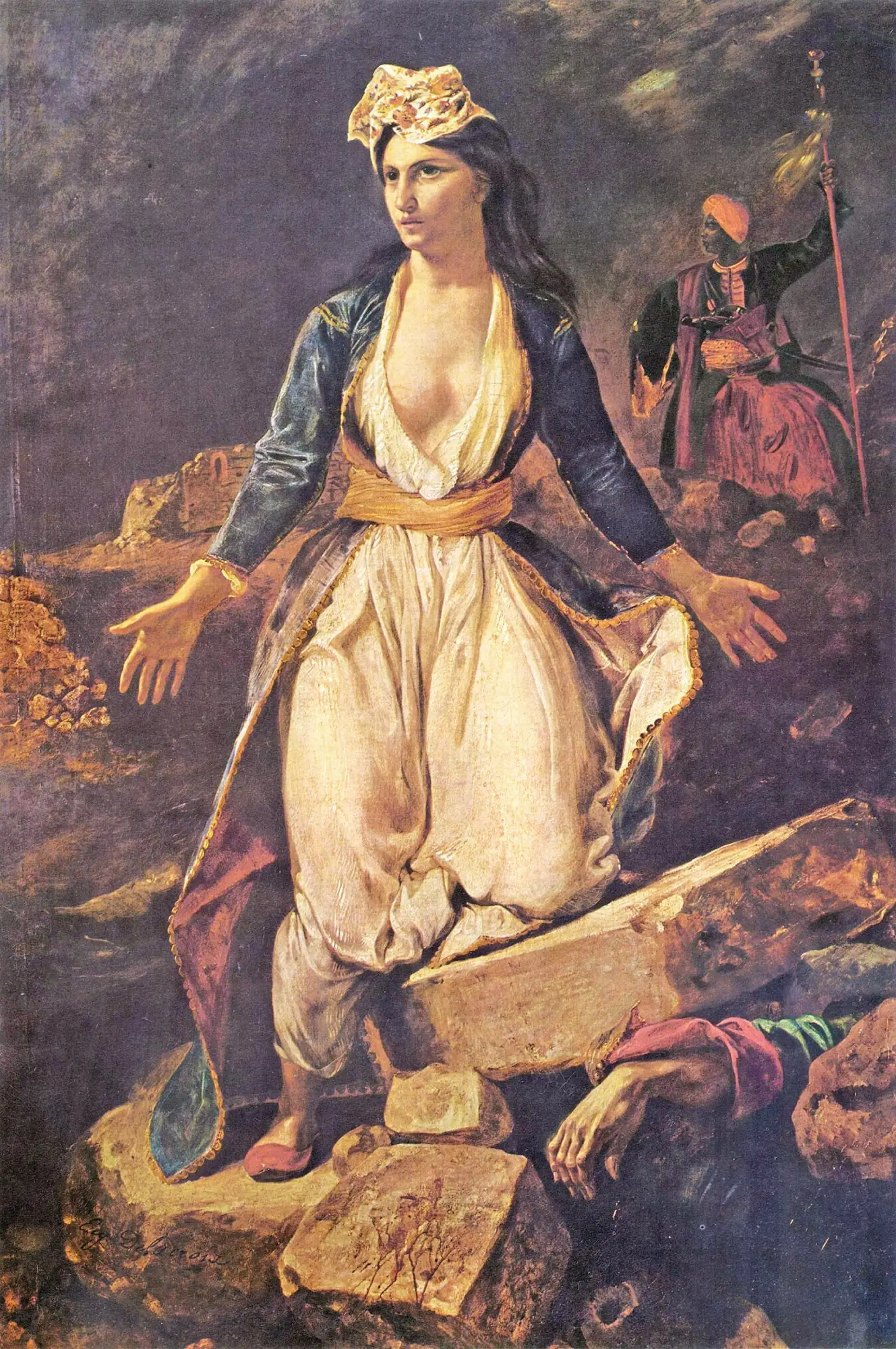
To mark 200 years since the siege and Exodus of Messolonghi, one of the most iconic works of philhellenic art is coming to Greece for the first time.
Eugène Delacroix’s celebrated painting, Greece on the Ruins of Missolonghi (La Grèce sur les ruines de Missolonghi), will be exhibited at the Xenokrateio Archaeological Museum, in the center of the Sacred City of Messolonghi, through November 2026.
The painting’s arrival in Greece follows a request by the Greek state to the Museum of Fine Arts of Bordeaux, where the work is housed. Its presence in Messolonghi gives special weight to the anniversary year, as the painting returns symbolically to the place that inspired it.
Eugène Delacroix (April 26, 1798 – August 13, 1863) was one of the leading figures of 19th-century French Romantic painting. Through his work, he had a profound impact on the development of European art and played a decisive role in the transition toward Impressionism. Greece on the Ruins of Missolonghi was created just a few months after the Exodus of 1826 and remains one of the most powerful visual representations of the self-sacrifice of the Free Besieged.
In the painting, Greece is personified as a female figure standing over the ruins of Messolonghi. It is not a simple allegory. It is an image of mourning, strength, and historical dignity. Delacroix did not paint only the destruction of a city; he painted the sacrifice of a people and the moment when Messolonghi became an enduring symbol of freedom.
The exhibition is expected to be one of the major events of the 2026 anniversary commemorations. The Ministry of Culture is organizing a press conference on Saturday, March 14, at 1:00 p.m., at the Xenokrateio Archaeological Museum, in the presence of Minister of Culture Lina Mendoni, underscoring the importance attached to the event.

This exhibition is not just a cultural event. It is also an act of historical remembrance. Two centuries after the Exodus, Messolonghi is not simply recalling its past. It is bringing it back into the present through a painting that spoke to Europe about Greek sacrifice more powerfully than almost any other work of art.
For those wishing to visit, the Xenokrateio Archaeological Museum is located at 2 Asimaki Fotila Street, Messolonghi. The museum is open daily from 8:30 a.m. to 3:30 p.m. and remains closed every Tuesday. Full admission is €10, while reduced admission is €5. The site also offers accessibility infrastructure for people with disabilities, including accessible entry, parking, and restrooms.
In 2026, Messolonghi will not simply honor an anniversary. It will host a work that transformed the pain of history into a universal symbol. And that alone gives this event a significance that goes far beyond the boundaries of an exhibition.